The Family Basement — $8,500
A multi-user basement for left- and right-handed players at a price the overhead units can't reach. The room is 13 feet wide so both hands share one tee: our room planner needs about 12'8" for two stances side by side for golfers up to 5'9", and about 12'10" for a 6-footer, and SkyTrak advises 1 to 2 feet over the ST MAX's 11 for a room shared by both hands. The SkyTrak ST MAX plays either way, and like the Square Golf Omni this build used to carry, it sits beside the ball, so switching hands means moving it to the other side — a quick move, and the one thing an overhead launch monitor avoids at around $5,000 and up. Carl's Place's 12-foot C-Series 9x12 with the Premium screen is the enclosure for both hands, and the Country Club Elite 5×8 leaves stance room on both sides of the hitting area, so nobody moves the mat or the enclosure. The BenQ TK710STi, a 4K laser short-throw, handles golf, movies, and family game nights. Course play is SkyTrak's Core: Foresight membership, $299.99 a year, in the same app the ST MAX runs; through November 12, 2026 (SkyTrak's Holiday Sale), a new ST MAX comes with a free first year of it. That is the build's one yearly bill, and over five years it comes to about $1,500 ($1,200 with the free year) that the Omni, which plays courses on its own app with no membership, didn't cost. The trade for non-golfers: what SkyTrak adds beyond courses is golf practice content, and Awesome Golf's arcade modes don't run on SkyTrak. Side netting and a defined hitting area protect non-golfers who aren't used to ball flight.
Shop this build
Every required part, one button each.
Grouped by retailer at today’s prices. Subtotals use today’s prices, so they can differ a little from the build total, which uses our reference price for each part.
When you buy through links on Northcourse, we may earn a commission at no additional cost to you. Read the full affiliate disclosure
Build price watch
Not buying yet? We’ll email you when a part of this build drops below its 30-day typical price at a retailer we track, with what the whole build saves. Amazon isn’t one: Amazon’s rules don’t allow price alerts. No newsletter, unsubscribe in one click.
Room requirements
The honest minimums. If your room is smaller, jump to the configurator — it’ll suggest a different build that fits.
Minimum room
Room for a full driver swing up to about 5′9″ (average swing). Taller golfers: a higher ceiling.
Room planner
See this build in your sim room.
The planner opens with this room, the build's launch monitor and projector, and a 5′9″ right-hander with an average swing, all drawn to scale. Change any of them to match yours.
Who this is for
- — Households with right and left-handed players, sharing one tee (only the ST MAX moves between them)
- — Families with kids who want to play casually
- — Mixed-use basements (golf + movies + game nights)
- — Buyers who want both hands at one tee without SIG12's 14 ft room or an overhead launch monitor
- — A basement about 13 × 18 ft with a 9.5 ft ceiling: room for golfers up to about 5'9" with an average swing (6-foot adults want 10 ft)
Cost breakdown
Required items first, then optional add-ons. Subscriptions and consumables shown separately.
When you buy through links on Northcourse, we may earn a commission at no additional cost to you. Read the full affiliate disclosure
| Category | Product | Price |
|---|---|---|
| Launch monitor | $1,695 | |
| Hitting mat | $959 | |
| Enclosure | $1,750 | |
| Projector | $1,999 | |
| Computer | $1,500 | |
| Software | $300 | |
| Accessory | $80 | |
| Accessory | $120 | |
| Accessory | $250 | |
| Total (required items) | $8,653 | |
| Annual ongoing (subscriptions) | +$300/yr | |
When you buy through links on Northcourse, we may earn a commission at no additional cost to you. Read the full affiliate disclosure
Two minutes, five questions, one tailored build.
Build your simulatorField notes
Who this build is for
Picture a household of three or four: one parent who plays a dozen rounds a summer, a spouse who would rather watch movies in the room than swing a club, and two kids who are right- and left-handed and equally likely to ask if they can hit balls before homework. The basement has a 9.5-foot ceiling, about 13 feet of width and 18 of depth, and currently holds a treadmill nobody loves. The room needs to do golf, but it also needs to do family game night, the occasional Pixar viewing, and possibly a Mario Kart tournament when cousins visit.
This is the build most family-first buyers should start with. It exists because a launch monitor beside the ball serves a mixed-hand household at a price no overhead unit comes near. The SkyTrak ST MAX, $1,695 at Amazon and Indoor Golf Outlet, plays left- or right-handed, but it sits beside the ball facing the golfer, so when the hand changes it moves to the other side of the ball — a quick move, and worth showing the kids on day one. If nobody should ever have to touch the launch monitor between players, that is what an overhead unit buys, at around $5,000 and up. Pair the ST MAX with Carl's Place C-Series 9x12 and its Premium screen, twelve feet wide so both hands share one tee, a Country Club Elite 5×8 with stance room on both sides, the BenQ TK710STi, a 4K laser short-throw, for golf-and-also-everything-else, and SkyTrak's own course play, and you have a room that earns its square footage seven nights a week.
Until October 2026 this build ran on the Square Golf Omni, which moves sides the same way. It is now sold out at Square Golf and on backorder at the golf retailers, so the build moved to the ST MAX, and the Omni is listed as its first alternative.
What this build trades, plainly
Family builds give up a measure of data accuracy for accessibility, and we want to be clear that is the deal. The ST MAX is good, but it is not Foresight GC3 good, and a serious player will want more than a family room needs. We chose it because anyone in the household can power on the room and play, and that matters more here than the last 5% of accuracy.
Course play is the part with a yearly bill, and it is a required line in this build. On the ST MAX it is SkyTrak's Core: Foresight membership, $299.99 a year, about 50 courses in the same app the launch monitor already runs, with nothing extra to install. Through November 12, 2026 (SkyTrak's Holiday Sale), a new ST MAX comes with a free first year of Core: Foresight; the build's total counts that year at its standing price anyway. When this build ran on the Omni it carried E6 Connect at $300 a year, so the yearly bill is unchanged. Against the Omni on its own app, which plays courses on pay-per-hole credits with no membership, Core is about $1,500 more over five years ($1,200 with the free first year). We say so plainly because it is the main thing the swap changes. GSPro is the better course-play product for a serious player, but a new SkyTrak can't run it: no SkyTrak model is on GSPro's list, and the community bridge owners used doesn't support the SkyTrak app version SkyTrak now offers. It would also be Windows-bound and configuration-heavy in a way that fights the "anyone walks up and plays" premise.
What the swap gives up is the arcade side of the room. Awesome Golf, with its target modes and games like Super Splash that non-golfers actually play, doesn't list any SkyTrak model, and TruGolf doesn't sell E6 Connect for SkyTrak either. Core adds golf practice content, PinSeeker and a Challenge Library among it, not multi-sport games. If the room is 30% golf and 70% other things for your household, that matters more than course count, and the $12,000 Dedicated Family Room, whose Garmin R50 runs Awesome Golf, is the build to look at.
The room is the other trade, and it is most of the reason this build costs what it does. Two stances at one tee take width: our room planner needs about 12'8" for a right- and a left-hander side by side when neither is over 5'9", and about 12'10" for a 6-footer, and SkyTrak advises 1 to 2 feet over the ST MAX's 11-foot minimum for a room both hands share, so the build is planned for a basement 13 feet wide. In it, the Carl's Place C-Series 9x12 with the Premium screen is the 12-foot enclosure that takes either hand from the middle. Its frame is 12'2" wide and 9'4" tall by Carl's spec sheet, and Carl's asks for 2–3 inches on each side and above, so 13 feet clears it and a 9.5-foot ceiling meets it at Carl's lower figure, with nothing to spare: measure to the inch before ordering. The Country Club Elite 5×8 gives each player a stance on their own side of the hitting area, so the mat stays put; only the ST MAX moves. The walls still sit inside the 7 feet around each golfer that Carl's Place and Shop Indoor Golf advise, which our planner reads as under guidance until the room is about 18 feet wide.
If your basement is narrower than 13 feet, the same parts list with the C-Series 8x10.5 ($575 less, a 10'10" frame that wants about 11'2" with Carl's 2 inches a side) and the Country Club Elite 5×5 ($360 less) still serves both hands, one at a time: the mat moves with the ST MAX when the hand changes, and the total comes to about $7,400. Below 11 feet you are under SkyTrak's own minimum for the ST MAX. If you have 14 feet to give, which is SIG's minimum room width for the SIG12, that upgrade buys a steel push-pin frame and a commercial-bay finish rather than more room for the swing.
Common gotchas during install
- Height for every user. This build's 9.5-foot ceiling suits a golfer up to about 5'9" with an average swing; adults 5'10" to 6'2" need 10 (Shop Indoor Golf's ceiling table, the figures our room planner uses). Nine feet is the lowest any published figure allows, and only for a golfer under 5'10" with a flat swing. Check each person who will swing in the ceiling-height tool, and remember kids grow into the taller rows. Measure clearance from the top of the mat, not from the floor: the Country Club Elite is 1¾ inches thick, and that comes off the ceiling. See our room requirements guide for height by player size.
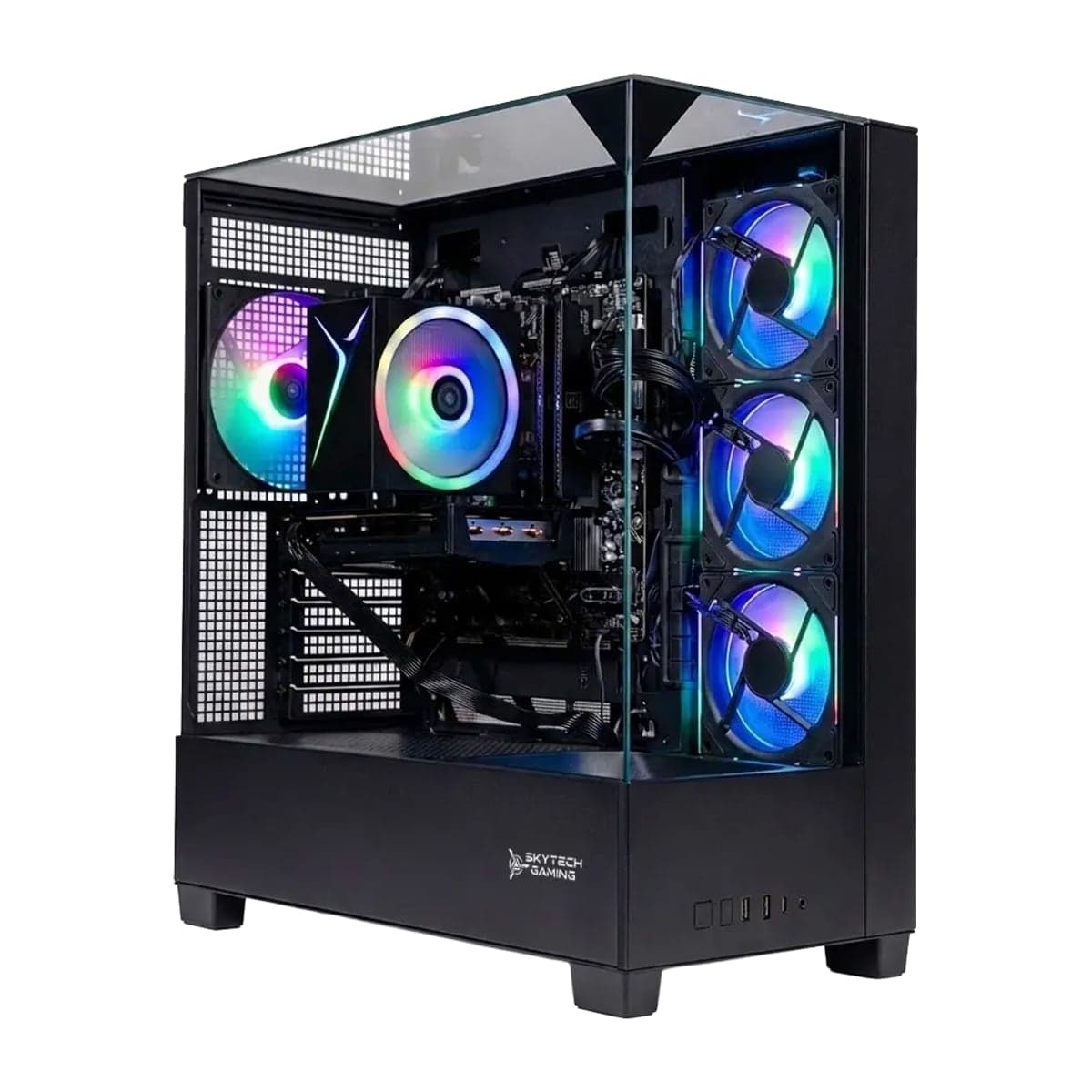
- The PC is a tower, on purpose. SkyTrak's Windows app asks for a discrete GTX 1650 at minimum, an RTX 2060 for 4K and an RTX 3060 for its top settings, so the build runs a pre-built RTX 5060 tower, about $1,200 from Amazon.com, above all three, rather than a mini PC whose integrated graphics don't meet the first. It needs a ventilated spot out of the swing path and out of reach of small hands.
- Power-on simplicity. A non-technical spouse should be able to start a round without opening Windows. Pin the SkyTrak app and a single "movie mode" shortcut to the desktop. If you find yourself writing instructions on a sticky note, the setup is too complex.
- Side netting is mandatory, not optional. Beginner mishits go places experienced golfers' mishits do not. The side-netting line item is non-negotiable in any build with kids in the rotation, and we have included it for this reason.
- Room depth. Plan on 18 feet: about a foot behind the screen, the ball 10 feet from it (SkyTrak's recommended distance for the ST MAX), and the 7 feet behind the tee that Shop Indoor Golf and Carl's Place advise.
- Both-handed considerations dictate width upfront. Decide on day one whether anyone in your household swings left-handed. If yes, the width is the decision: this build's 13 feet lets both hands share one tee, with only the ST MAX moving to the other side of the ball, the same move the Omni asked. Narrower than that, the mat moves with the launch monitor between players.
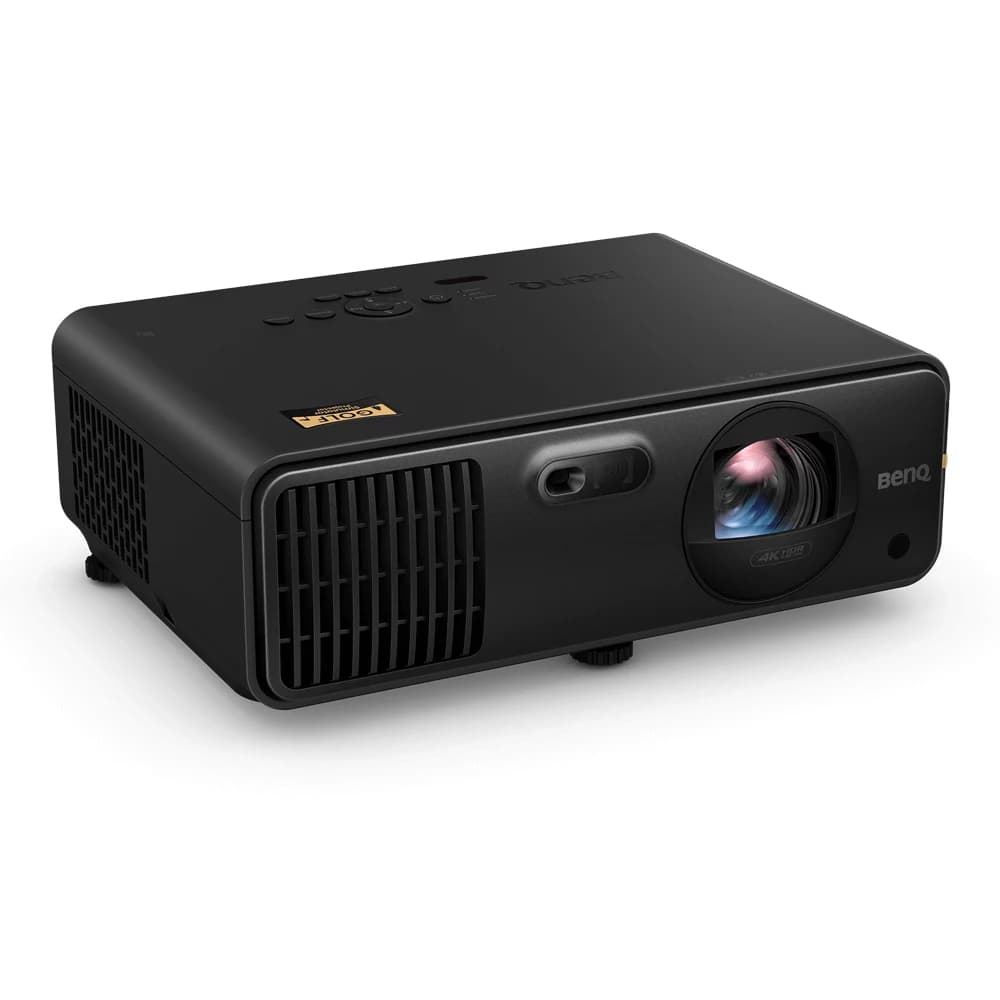
- Projector placement under a 9.5-foot ceiling. The C-Series 9x12 screen is 4:3, 132.3 inches (11') wide by 99.2 tall by Carl's spec sheet, and the TK710STi's 0.69–0.83 throw fills that width from about 7½ to 9 feet away (a 16:9 picture sized to the width letterboxes on the 4:3 screen). Filling the whole 4:3 screen instead means throwing the 16:9 frame wide enough to cover its 99-inch height, about 10 to 12 feet out, which is over the tee or behind it. With the tee about 10 feet from the screen, the short end of the zoom puts the mount about 2½ feet ahead of the ball; at the long end it is less than a foot ahead, near where a tall adult's driver tops out. Set the zoom short, mount it tight to the ceiling, and check the spot with the tallest player's driver before you drill. A skied shot can still reach it, so a projector cage is worth budgeting.
- Cable management at kid height. Tape down anything that runs along the floor, and route the projector HDMI through the ceiling mount cable channel. Curious six-year-olds find loose cables.
What to upgrade first if budget grows
Add about $3,800 and the conversation changes more than you might expect. The biggest leverage spend is the launch monitor: stepping up to the Garmin R50 gives you a built-in 10-inch touchscreen so kids can play with no PC at all, just power-on-and-swing. That is the $12,000 Dedicated Family Room and the right move if anyone in the household is intimidated by Windows. It also moves to the SIG12 for a commercial-bay finish, in a bigger room: SIG asks for 14 by 20 feet under a 10-foot ceiling.
If the budget jumps to about $24,000, the showroom shift is real and worth its own conversation — see the $24,000 Family Showroom. The Uneekor EYE XO2 mounts overhead — Uneekor asks for a 10-foot ceiling, half a foot more than this basement — and both-handed users stop being a configuration problem entirely, and the projector steps up to a 5,100-lumen laser that holds up with the lights on.
Where to go from here
If you have not run the configurator, do that first — five questions and we will tell you whether the family build path is actually the right one for your household, or whether recreational-tier suits you better. If your room is narrower than 13 feet, the swap above keeps this build at about $7,400 with the mat moving between hands; narrower than about 11'2", the space-constrained guide covers your options honestly; a ceiling under 9.5 feet is a question for the ceiling-height tool before any build. Otherwise, this is where most multi-user households should plant their flag.
Why these components
Each pick has a reason. Here’s ours.
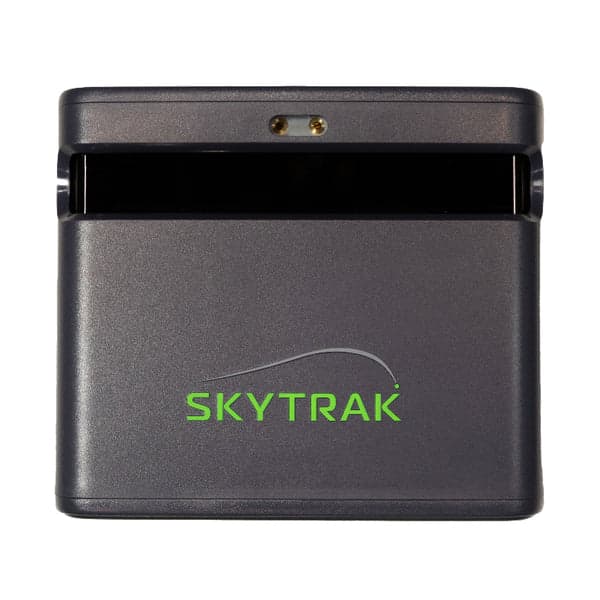
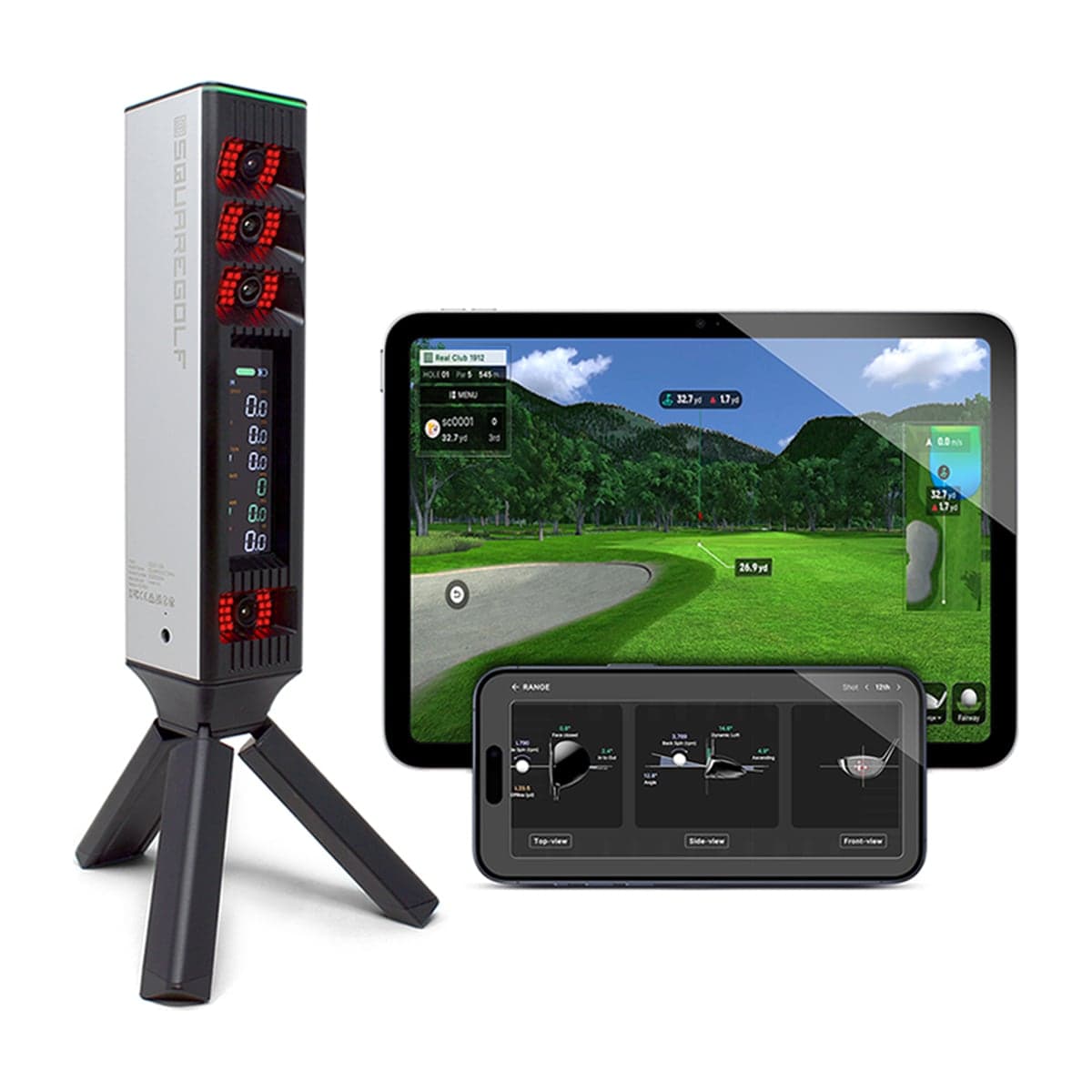
SkyTrak's current model, $1,695 at Amazon and Indoor Golf Outlet: camera plus radar beside the ball, nothing overhead and nothing behind the golfer. Right- and left-handed players both use it, but it sits beside the ball facing the golfer, so switching hands means moving it to the other side — a quick move, but a move, and the same one the Square Golf Omni asks. The Omni, this build's launch monitor until October 2026, is $96 less and plays courses on its own app with no yearly fee, about $1,500 less than SkyTrak's Core over five years ($1,200 with the free first year SkyTrak includes through November 12, 2026); as of October 2026 it is sold out at Square Golf and on backorder at the golf retailers.
Buy from
- Buy at Amazon $1,695Free ship, SkyTrak ST MAX
- Buy at PlayBetter $1,695Free ship, SkyTrak ST MAX
- Buy at Indoor Golf Outlet $1,695Free ship, SkyTrak ST MAX
- Buy at Carl's Place $1,695Free ship, SkyTrak ST MAX
- Buy at Shop Indoor Golf $1,695Free ship, SkyTrak ST MAX
- Buy at Rain or Shine Golf $1,695Free ship, SkyTrak ST MAX
Prices confirmed Nov 12, 2026 · we check every retailer daily
Alternatives we considered
 Mid-tier
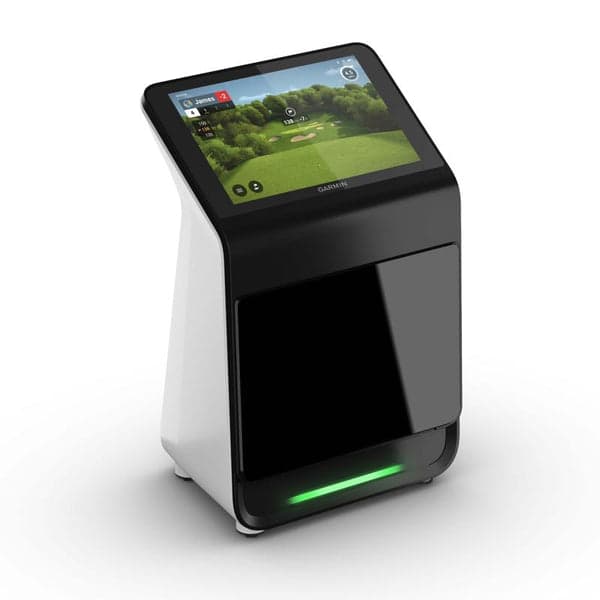 Mid-tierGarminApproach R50
Built-in 10-inch touchscreen means no PC fiddling. Power on, hit shots, see data. The all-in-one option.
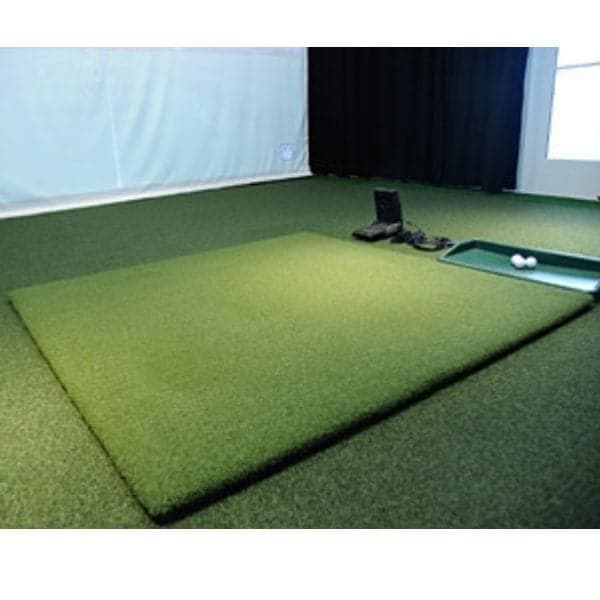
Multiple users at varying skill levels means more wear and more mishits. The Country Club Elite's real-feel turf takes the abuse and is easy on beginner wrists, and the 5×8 leaves stance room on both sides of the hitting area, so a right- and a left-hander share it without moving it. The 5×5 is $360 less and gives one player a full stance; with it, the mat moves when the hand changes.
Buy from
- Buy at Amazon $959Free ship, Country Club Elite Mat (5×8)
- Buy at Indoor Golf Outlet $959Free ship, Country Club Elite Mat (5×8)
- Buy at Rain or Shine Golf $959Free ship, Country Club Elite Mat (5×8)
Prices confirmed Nov 12, 2026 · we check every retailer daily
Alternatives we considered
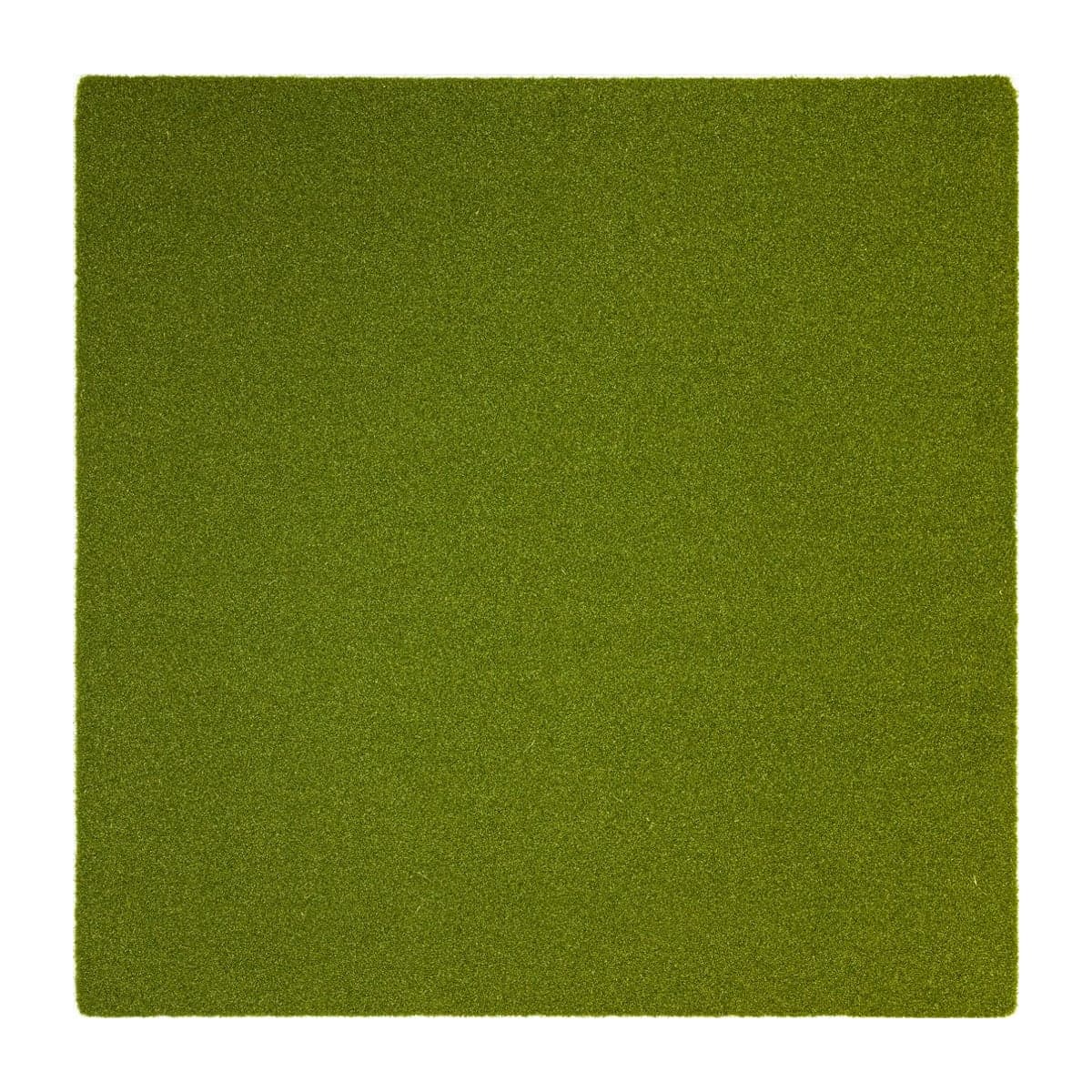 Mid-tierReal Feel Golf MatsCountry Club Elite Mat (5×5)
Full-stance 5×5 with real-feel turf. Used in commercial ranges; the practical mid-tier pick for serious-practice home builds.
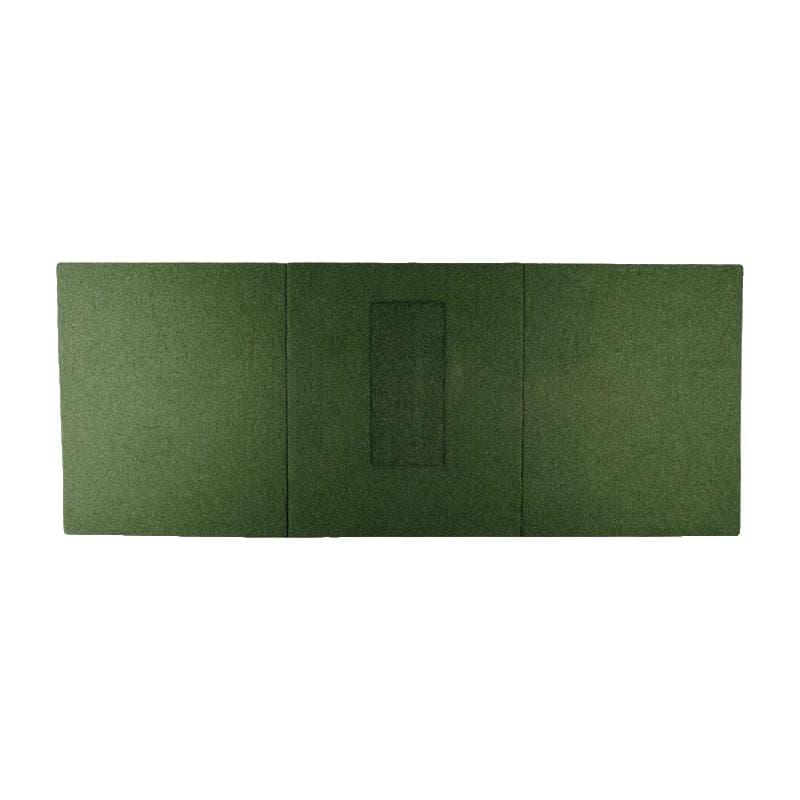 PremiumShop Indoor GolfSIGPRO Softy (4x10)
The original Softy at 4×10: a Teeline strip on soft foam that takes a real tee, in the middle with a stance on each side.
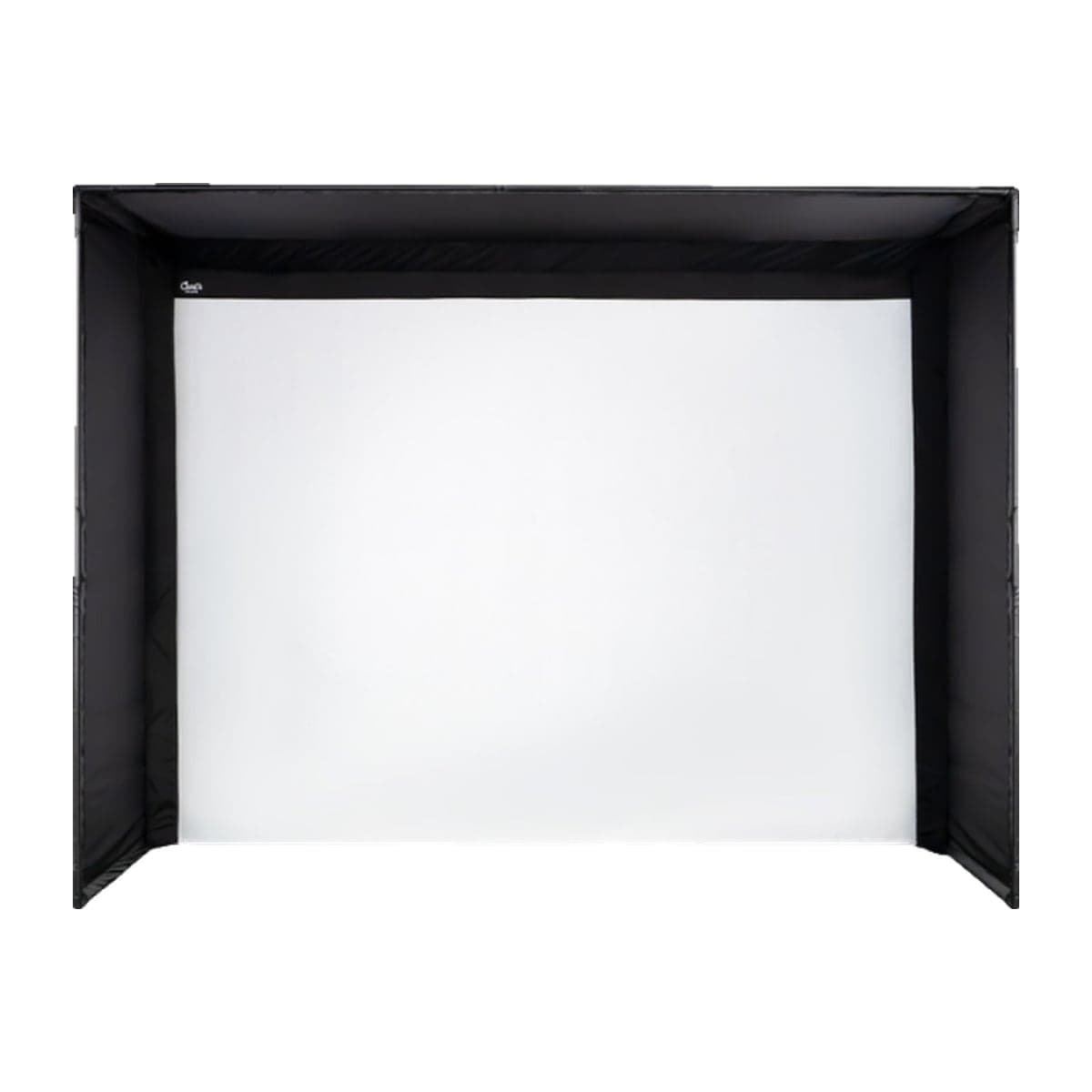
Carl's 12-foot C-Series 9x12 with the Premium 3-layer screen: the enclosure width for both hands, and the cost-effective family answer next to a SIG12, which SIG wants in a room at least 14 feet wide. Its frame is 12'2" wide and 9'4" tall (146.3 by 112 in, Carl's spec sheet) and Carl's asks for 2–3 inches each side and above, so this 13-foot room clears it and the 9.5-foot ceiling meets it at Carl's lower figure, with nothing to spare. Carl's Place screen and frame quality are appropriate for a household with regular use.
Buy from
- Buy at Indoor Golf Outlet $1,750Free ship, C-Series DIY Enclosure (9x12, Premium screen)
- Buy at Carl's Place $1,750Free ship, C-Series DIY Enclosure (9x12, Premium screen)
Prices confirmed Nov 12, 2026 · we check every retailer daily
Alternatives we considered
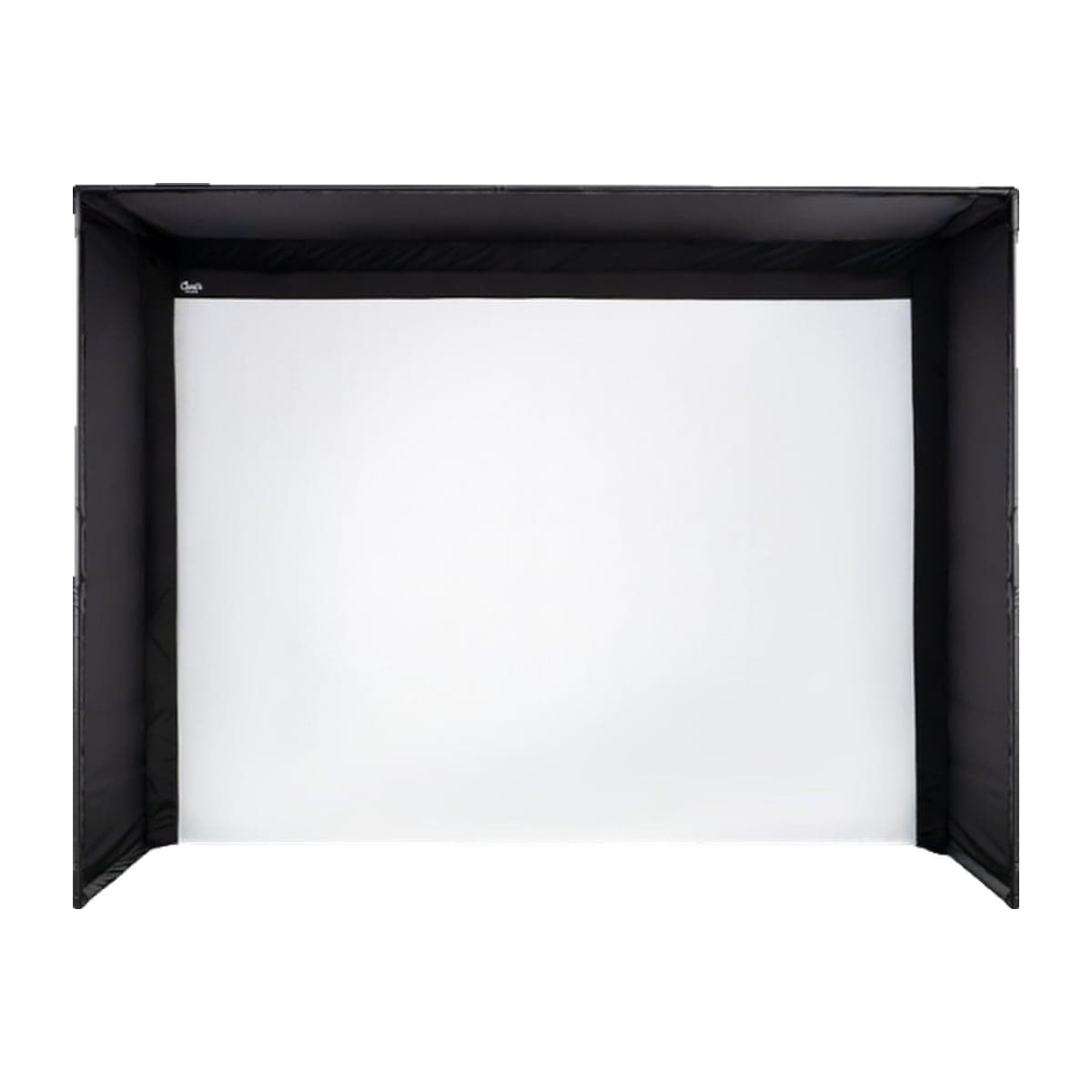 BudgetCarl's PlaceC-Series DIY Enclosure (8x10.5)
8' × 10.5' kit with a 4:3 screen 116.3 in wide. The mainstream Carl's C-Series — DIY savings, real enclosure feel.
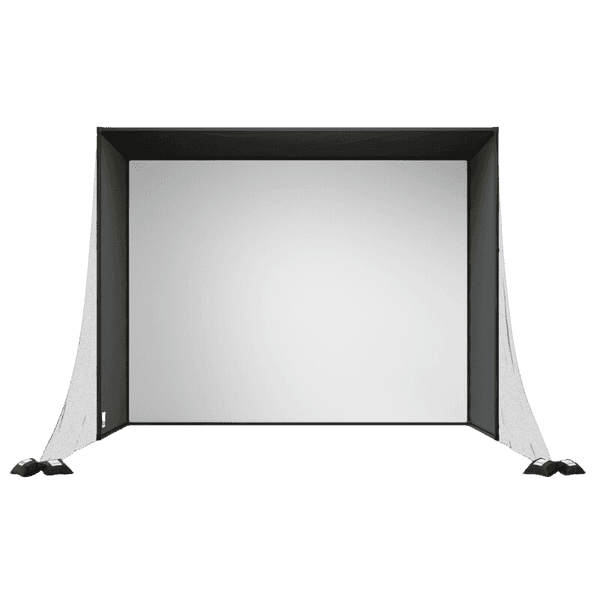 Mid-tierRain or Shine GolfSwingBay 9x12 (Triple-Layer Screen)
Lightest aluminum push-button frame with triple-layer screen. Quick assembly, both-handed friendly.
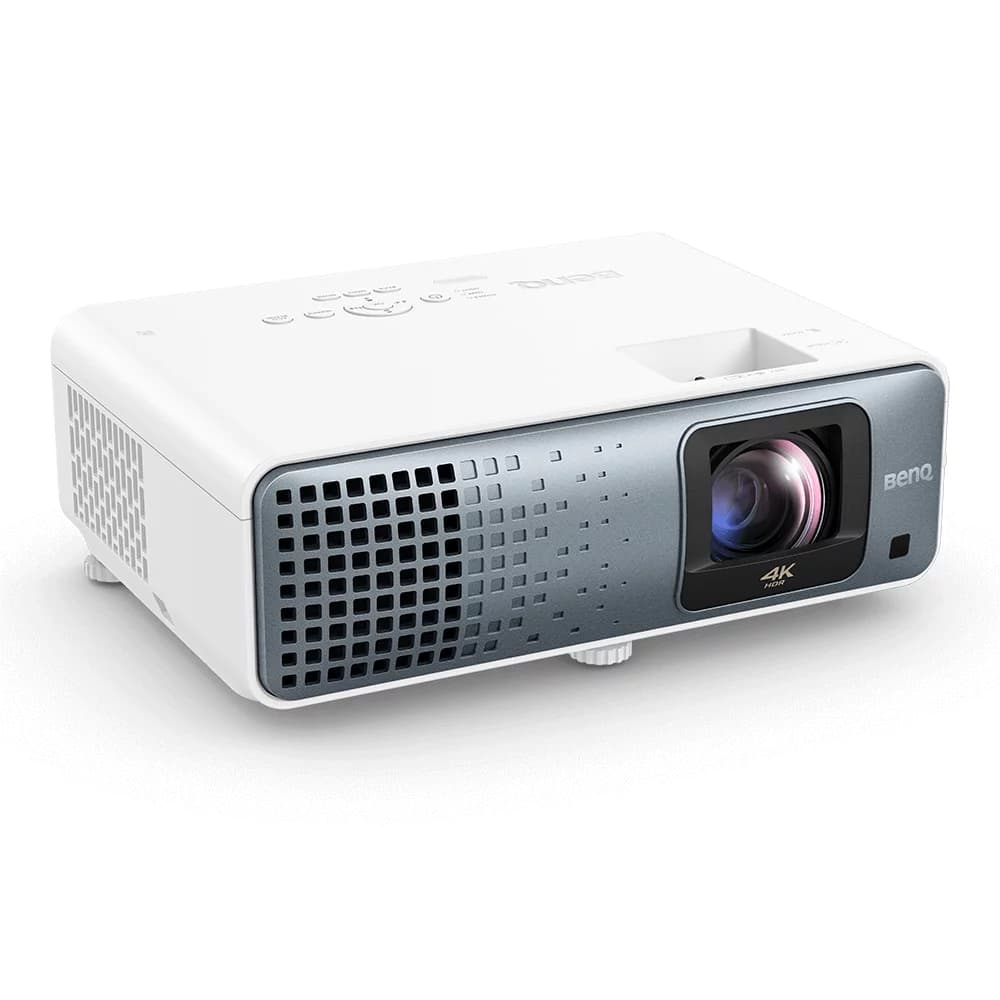
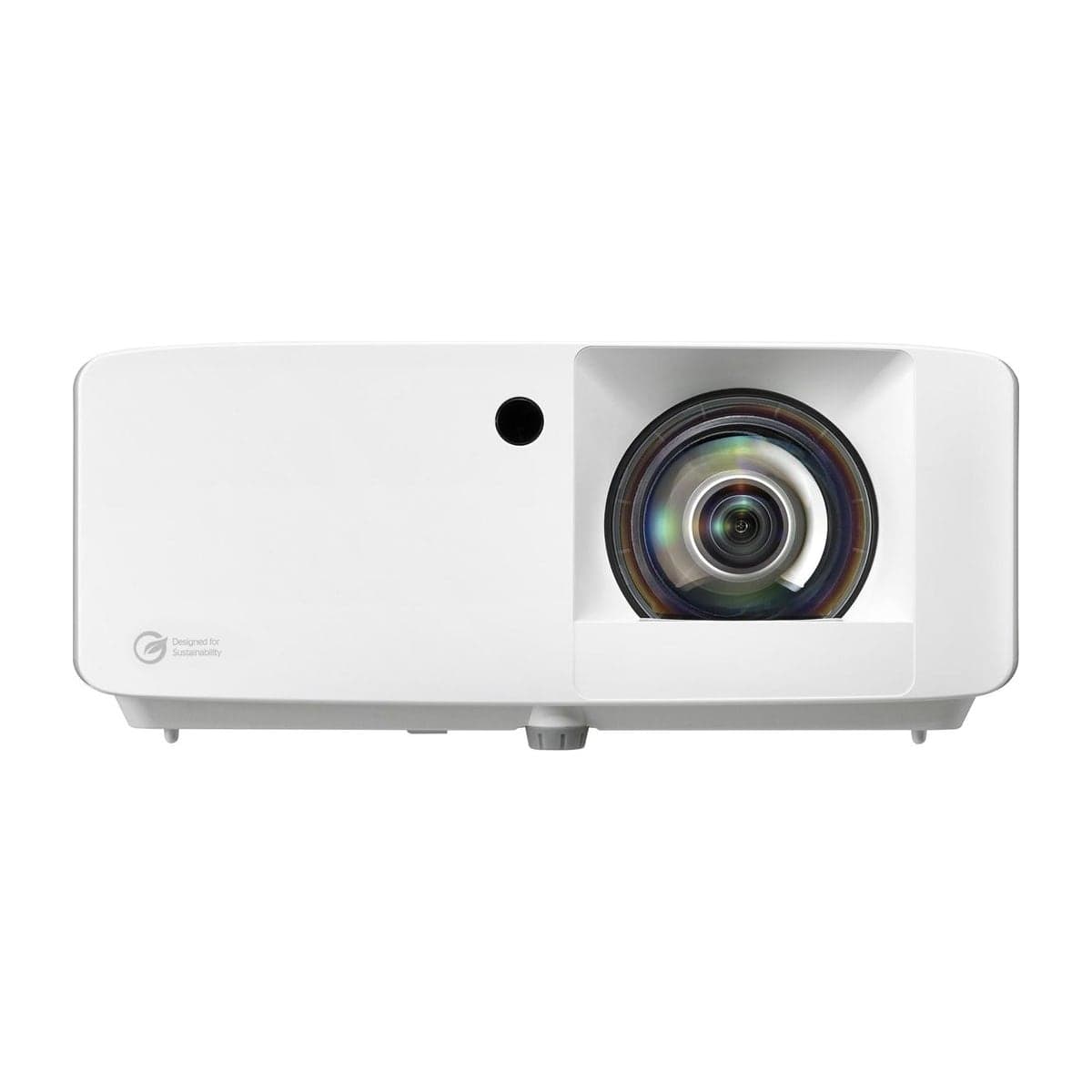
4K with HDR and gaming-grade input lag by BenQ's figures (16.7 ms at 4K, 4.2 ms at 1080p/240Hz) — suited to golf, movies, and the family game nights the room will host — on a laser with no lamp to replace. The 9x12's screen is 4:3, 132 × 99 in: a 16:9 picture the screen's width (it letterboxes) puts the projector 7½ to 9 feet from the screen, a foot or two ahead of a tee 10 feet back, and filling the whole screen takes it 10 to 12 feet out, over the tee or behind it. Keep the zoom at the short end and check the mount position with the tallest player's driver.
Buy from
- Buy at Amazon $1,965Free ship, TK710STi
- Buy at PlayBetter $2,199Free ship, TK710STi
- Buy at Indoor Golf Outlet $2,199Free ship, TK710STi
- Buy at Carl's Place $2,199Free ship, TK710STi
- Buy at Shop Indoor Golf $2,199Free ship, TK710STi
- Buy at B&H $1,999Free ship, TK710STi
Prices confirmed Nov 12, 2026 · we check every retailer daily
Alternatives we considered
Pre-built with warranty, so non-technical family members never troubleshoot a custom build. Skytech's Ryzen 7 5700 tower with an RTX 5060, sold by Amazon.com. SkyTrak's Windows app lists a discrete GTX 1650 as its minimum, an RTX 2060 for 4K and an RTX 3060 for maximum settings; this card is above all three, which matters on the TK710STi's 4K. GSPro would run well on it at 1080p to 1440p, but GSPro doesn't reach a new SkyTrak, so that only matters if the launch monitor changes.
Buy from
Prices confirmed Nov 12, 2026 · we check every retailer daily
Alternatives we considered
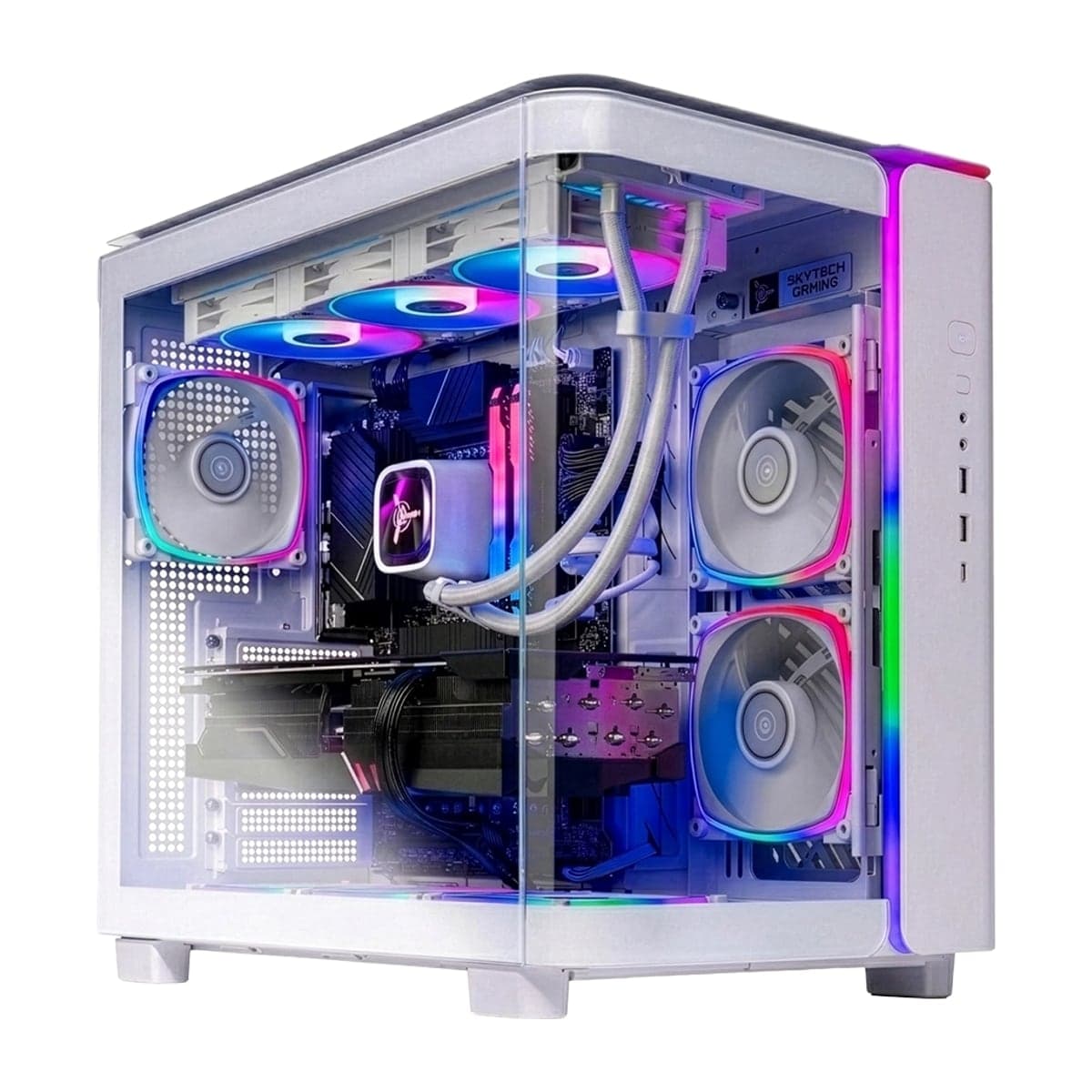 PremiumSkytechKing 95 Gaming PC (RTX 5070 Ti)
Core i7-14700F + RTX 5070 Ti 16GB + 32GB DDR5, sold by Amazon.com. Clears Uneekor, Foresight Premier and GSPro-at-4K requirements with room to spare.
 Mid-tierSkytechShadow 5 Gaming PC (RTX 5060 Ti)
Ryzen 7 9700X + RTX 5060 Ti 16GB + 16GB DDR5. A faster graphics card than our standard RTX 5060 tower, with half its memory, at a higher price.
SkyTrak's course play: Core: Foresight at $299.99 a year, about 50 courses in the same app the ST MAX runs, nothing extra to install, plus the practice tools SkyTrak lists under its Essential tier, PinSeeker and a Challenge Library among them. Through November 12, 2026 (SkyTrak's Holiday Sale), a new ST MAX comes with a free first year of Core: Foresight. It costs the same $300 a year E6 Connect did when this build ran on the Omni; against the Omni on its own app, which needs no membership, it is about $1,500 more over five years ($1,200 with the free year). What it doesn't have is arcade or multi-sport modes: Awesome Golf, the usual pick for those, doesn't run on SkyTrak.
Buy from
- Buy at PlayBetter $300Free ship, SkyTrak Core Membership
- Buy at Indoor Golf Outlet $300Free ship, SkyTrak Core Membership
- Buy at SkyTrak $300Free ship, SkyTrak Core Membership
Prices confirmed Nov 12, 2026 · we check every retailer daily
Alternatives we considered
 BudgetVariousNative LM Software (Bundled)
Free with most launch monitors. Sufficient for range practice without committing to additional spend.
$0
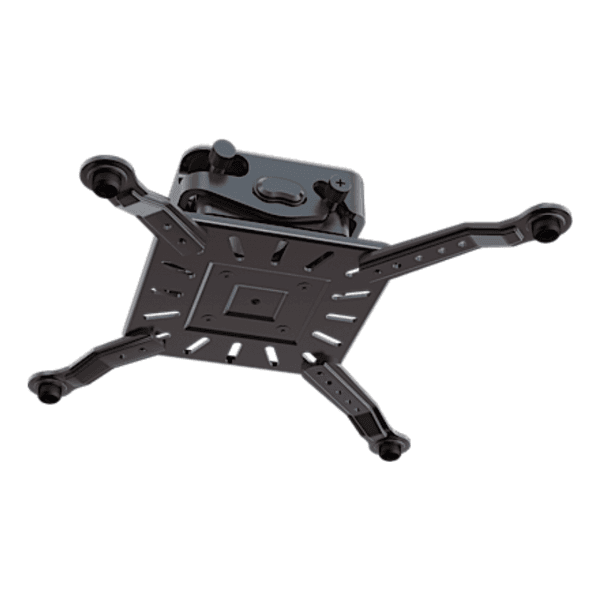
Adjustable ceiling mount with cable management. Keeps cables out of reach of curious kids.
Buy from
- Buy at Amazon $20Free ship, Projector Ceiling Mount
- Buy at Indoor Golf Outlet $260Free ship, Projector Ceiling Mount
- Buy at Shop Indoor Golf $120Free ship, Projector Ceiling Mount
- Buy at Rain or Shine Golf $80Free ship, Projector Ceiling Mount
Prices confirmed Nov 12, 2026 · we check every retailer daily
HDMI 2.1 for 4K, surge protection, child-safe cable management.
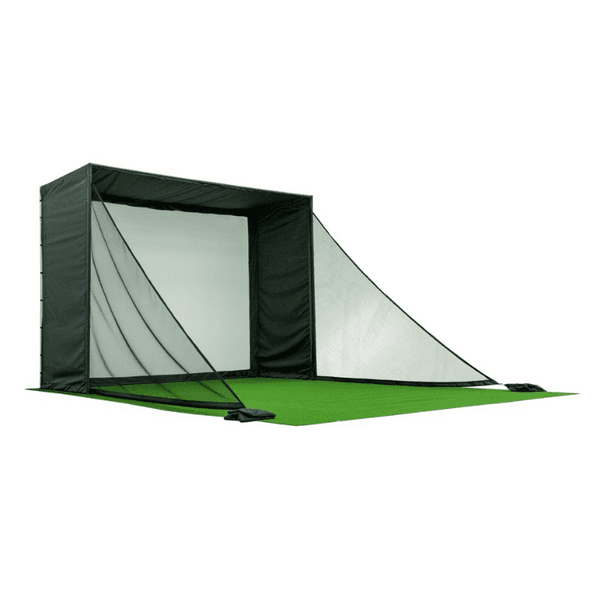
Non-negotiable in a family build. Beginner mishits go places experienced golfers' mishits don't — both sides need protection.
Buy from
- Buy at PlayBetter $140Free ship, Side Netting
- Buy at Indoor Golf Outlet $120Free ship, Side Netting
- Buy at Carl's Place $140Free ship, Side Netting
Prices confirmed Nov 12, 2026 · we check every retailer daily
If you're cross-shopping
Side-by-side comparisons for the The Family Basement — $8,500 components.
Stay in the loop
Keep an eye on this build.
We email when meaningful pricing changes hit any component in this build, or when a stronger alternative shows up. One short message, maybe twice a month.
Want this build tailored?
Adjust for your room and your budget.
The configurator takes the same logic that produced this build and applies it to your specific dimensions and persona. If your room is tight, expect different picks.