The Garage Build — $4,000 Cost-Effective
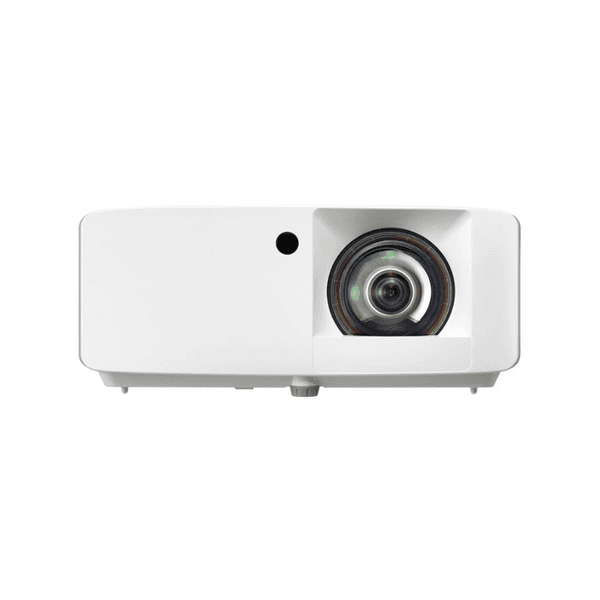
The cheapest build we'll endorse. Garmin R10 covers indoor and outdoor use at $499.99 and is the realistic floor for trustworthy ball data — anything cheaper has issues we'd warn you about. Net Return Pro Series is the portable, no-mount enclosure that fits a garage rental, and its $399 Simulator Kit adds the impact screen the net does not have. Optoma's GT2400HDR brings 1080p course visuals at $1,299 with a 30K-hour laser. There is no computer: Garmin Home Tee Hero runs on your phone, and a phone-to-HDMI adapter or a casting device puts it on the projector. Total comes in around $3,700, inside its $4,000 label: the end of the R10's long sale and the screen kit took it past the $3,000 it used to carry, and it remains the cheapest build we'll endorse.
Shop this build
Every required part, one button each.
Grouped by retailer at today’s prices. Subtotals use today’s prices, so they can differ a little from the build total, which uses our reference price for each part.
When you buy through links on Northcourse, we may earn a commission at no additional cost to you. Read the full affiliate disclosure
Build price watch
Not buying yet? We’ll email you when a part of this build drops below its 30-day typical price at a retailer we track, with what the whole build saves. Amazon isn’t one: Amazon’s rules don’t allow price alerts. No newsletter, unsubscribe in one click.
Room requirements
The honest minimums. If your room is smaller, jump to the configurator — it’ll suggest a different build that fits.
Minimum room
Room for a full driver swing up to about 5′9″ (average swing). Taller golfers: a higher ceiling.
Room planner
See this build in your sim room.
The planner opens with this room, the build's launch monitor and projector, and a 5′9″ right-hander with an average swing, all drawn to scale. Change any of them to match yours.
Who this is for
- — First-time sim buyers with a hard ceiling around $4,000
- — Renters or buyers who can't drill into walls or ceilings
- — Indoor + outdoor users who want a single launch monitor for both
- — Anyone willing to accept R10 data limits in exchange for the price
- — A garage bay about 10 × 16 ft with a 9.5 ft ceiling: room for golfers up to about 5'9" with an average swing (6-footers want 10 ft)
Cost breakdown
Required items first, then optional add-ons. Subscriptions and consumables shown separately.
When you buy through links on Northcourse, we may earn a commission at no additional cost to you. Read the full affiliate disclosure
| Category | Product | Price |
|---|---|---|
| Launch monitor | $500 | |
| Hitting mat | $599 | |
| Enclosure | $795 | |
| Accessory | $399 | |
| Projector | $1,299 | |
| Software | $0 | |
| Accessory | $120 | |
| Computer · optional | +$739 | |
| Total (required items) | $3,712 | |
| Annual ongoing (subscriptions) | +$100/yr | |
When you buy through links on Northcourse, we may earn a commission at no additional cost to you. Read the full affiliate disclosure
Two minutes, five questions, one tailored build.
Build your simulatorField notes
This is the build for the buyer who has read every forum thread for a month, set out to spend $3,000, and isn't interested in being marketed to. The total is about $3,700, so the build carries a $4,000 label. We came in about $710 over that first number because below this point you start hitting components we wouldn't endorse — $99 mats that hurt your wrists, off-brand projectors that fail in 18 months, launch monitors with data so noisy you'd be better off with a smartphone app. That is the honest floor: the end of the R10's long sale, and the $399 screen kit the Net Return needs before a projector has anything to hit, are what moved it there. What it doesn't need is a computer: Garmin's Home Tee Hero runs on your phone, and a phone-to-HDMI adapter or a casting device puts it on the projector. We'd rather tell you that up front than ship you a build sheet that hits a marketing number and breaks.
If you're here, you probably rent the garage or share a wall with the rest of the house. You're not drilling into anything. You'll set up, swing, and tear down — or leave it half-up if the family lets you. You'd rather buy used or closeout than chase newest-gen, and the phrase "subscription required" makes you close the tab.
What this build trades, plainly
The trade at this price is data quality. The Garmin R10 is the realistic floor for a launch monitor with trustworthy outdoor numbers. Indoors, behind a screen, it estimates spin rather than measuring it directly, and forum testing puts indoor carry error at roughly 5 to 8 yards on mid-irons compared to a SkyTrak+ at the next tier. That's enough to club incorrectly on the course if you train hard against the indoor numbers. Use the R10 to play virtual rounds and get rough feedback. Don't use it to rebuild your bag mapping.
The other trade is course play behind a paywall. Garmin's Home Tee Hero comes with a Garmin Golf membership at $99.99/year, which is the cheapest course-play subscription in the niche by a wide margin — but it is still a subscription. Skip it and the R10 reverts to a range-mode device. Forums have been pretty clear: at $99.99/year for 43,000+ courses, this is one of the few subscriptions worth paying. Most are not.
The Optoma GT2400HDR is 1080p, not 4K. On a sim screen at 5 to 6 feet of viewing distance, you genuinely will not notice. We mention this because builders who upgrade to a 4K projector in this price tier are spending money in the wrong place.
The room is the trade no part of this build can make for you. Plan on a bay 10 feet wide and 16 feet deep under a 9.5-foot ceiling. Ten feet is the narrowest room Indoor Golf Outlet and PlayBetter list for the Net Return (Garmin's own minimum for the R10 is 8). At 10 feet the side walls sit inside the 7 feet around the golfer that Carl's Place and Shop Indoor Golf advise, so our room planner reads them as under guidance, not as a fail. Sixteen feet is our room planner's depth: about a foot behind the screen, the ball 8 feet from it (Garmin's minimum), and the 7 feet behind the tee that Shop Indoor Golf and Carl's Place advise, with the R10 sitting 6 to 7 feet behind the ball inside that space. The 9.5-foot ceiling suits a golfer up to about 5'9" with an average swing; a 6-footer wants 10 feet (Shop Indoor Golf's ceiling table, the figures the planner uses). Nine feet is the lowest any published figure allows, and only for a golfer under 5'10" with a flat swing. Check your height and swing in the ceiling-height tool before you buy.
DIY tips that actually save money
The Net Return Pro Series is in this build because it's the no-mount, no-tools enclosure that fits a garage rental. If you own the garage and have a weekend, the Carl's Place DIY kit is $999.95 with its impact screen included, against $1,194 for the Net Return plus its $399 Simulator Kit — about $195 less, and it brings a better impact screen with Carl's BlackStop side walls and top for light containment. Money isn't the reason it isn't the default here. Time-to-playable is: the Net Return is hitting balls in an hour and folds away when the garage has to be a garage again. Take the DIY kit if the install can stay up.
Be skeptical of any setup that requires a subscription to unlock features the hardware already supports. The R10's Home Tee Hero subscription is fair because Garmin licenses the courses. The Foresight+ membership plus Course Pass you need to play virtual rounds on a Bushnell Launch Pro or a Foresight GC3 — roughly $500–$1,200/yr on hardware you already own — is the model to avoid.
The place to absolutely not skimp is the mat. A $100 mat will give you wrist tendinopathy inside three months of regular use. The Country Club Elite at $599 is the realistic minimum and lasts years, and it ships through Amazon if you want it moving while bigger items are en route from the specialty retailers. One thing you can skip: marked sim balls. The R10 doesn't need them (they are for units like the Rapsodo MLM2PRO), so this build leaves them out; play the ball you play outside.
What to upgrade first when budget grows
The biggest single leap in this entire price ladder is the step from this build to the $6,000 ST MAX garage builds. For about $1,200 more you swap the R10 for SkyTrak's ST MAX at $1,695 — a real photometric launch monitor; MyGolfSpy's 2024 testing put the SkyTrak+, its predecessor on the same camera-plus-radar design, within 1% of a GCQuad on indoor ball speed. You can also drop the subscription if range practice is enough: SkyTrak's free level covers the range, and its course play is Core: Foresight at $299.99/yr, three times Home Tee Hero. Range-only, dropping Home Tee Hero returns $499.95 across five years against a $1,195 hardware step, so the five-year gap narrows to about $700. With courses on both, it widens to about $2,200. One cheaper route is worth checking before you order: the SkyTrak+, the ST MAX's discontinued predecessor with a smaller hitting zone, is $1,095 new while closeout stock lasts (Amazon; Rain or Shine still lists $1,995). That shrinks the step from the R10 to about $600, the range-only five-year gap to about $100, and the gap with courses on both to about $1,600, for as long as that stock lasts.
If that step is still out of reach, hold the build as-is for a season and see whether you actually use it. Some people who buy an entry sim use it twice and stop. Others play three nights a week and immediately want to upgrade. Find out which one you are before spending more.
Where to go next
Run the configurator if you want to see whether your room actually fits this build. If the subscription math is what's driving the budget, the subscription-cost article lays out the five-year totals for every major launch monitor. And if you want to see what about $2,000 more buys you, the $6,000 cost-effective garage build is the next step up.
Cross-shopping the cheapest credible options? See our full guide to cheap and budget golf simulator builds for cost-effective buyers — every build from $4K to $7K, every component named, every tradeoff disclosed.
Why these components
Each pick has a reason. Here’s ours.
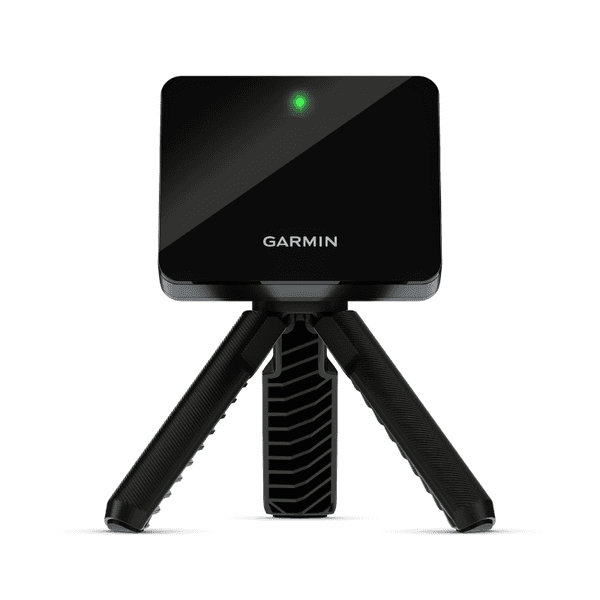
$499.99 is the realistic floor for a launch monitor with trustworthy carry data outdoors. Indoor accuracy is meaningfully worse than photometric units — surface this tradeoff before buying. The Home Tee Hero subscription unlocks course play.
Buy from
- Buy at Amazon $500Free ship, Approach R10
- Buy at PlayBetter $500Free ship, Approach R10
- Buy at Indoor Golf Outlet $500Free ship, Approach R10
- Buy at Rain or Shine Golf $500Free ship, Approach R10
- Buy at B&H $500Free ship, Approach R10
Prices confirmed Nov 12, 2026 · we check every retailer daily
Alternatives we considered
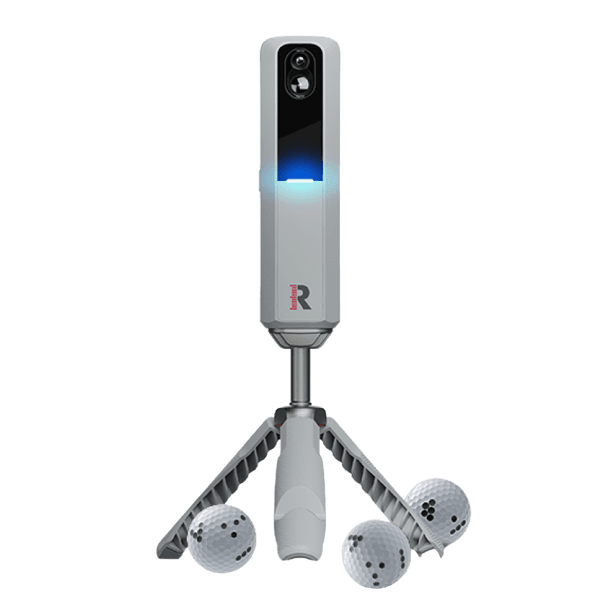 BudgetRapsodoMLM2PRO
Measures angle of attack and club path — with Rapsodo's Core membership, a yearly subscription those metrics require.
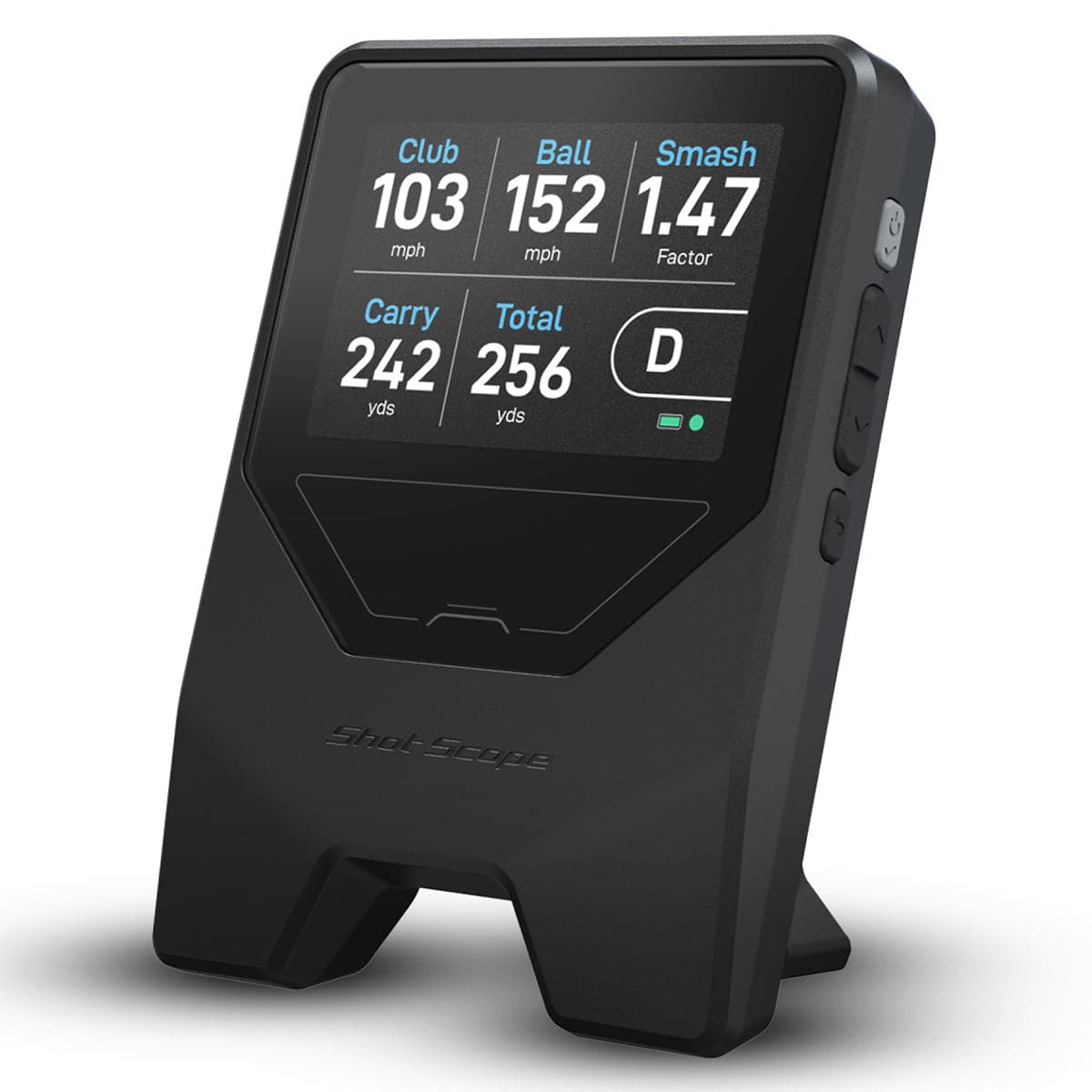 BudgetShot ScopeLM1
A low-cost radar that measures the five metrics most range golfers actually care about. Buy it if you want feedback at the range, not a simulator.
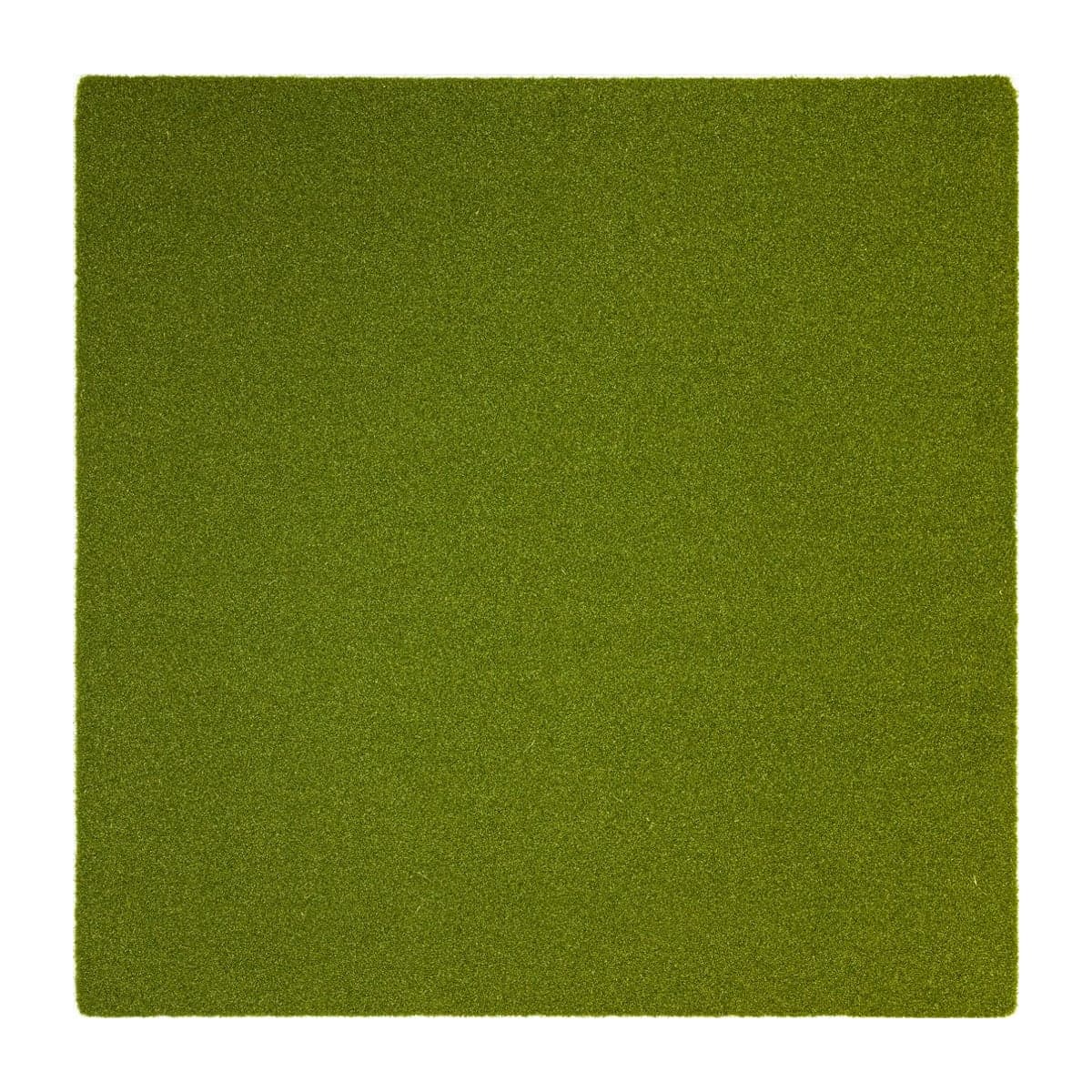
The realistic minimum mat. Cheaper mats injure wrists within months — false economy. CCE at $599 lasts years and won't beat you up.
Buy from
- Buy at Amazon $599Free ship, Country Club Elite Mat (5×5)
- Buy at Indoor Golf Outlet $599Free ship, Country Club Elite Mat (5×5)
- Buy at Rain or Shine Golf $599Free ship, Country Club Elite Mat (5×5)
Prices confirmed Nov 12, 2026 · we check every retailer daily
Alternatives we considered
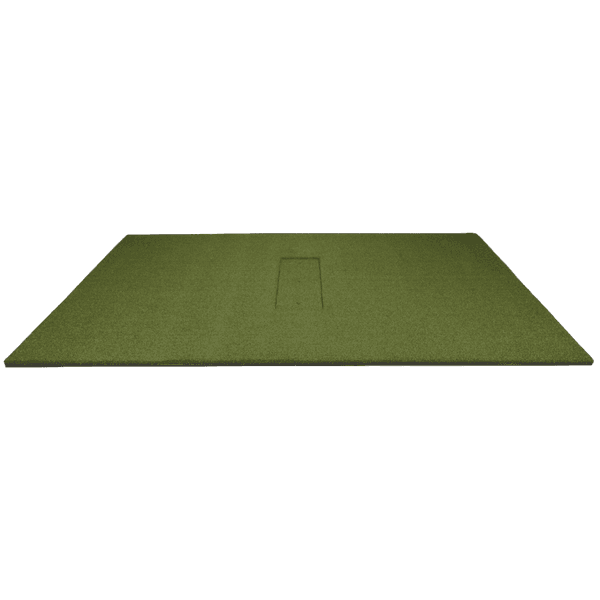 Mid-tierCarl's PlaceHotShot Hitting Mat System
Modular mat with replaceable HotShot strip inserts. Swap just the worn strip, not the whole mat. Three turf tiers.
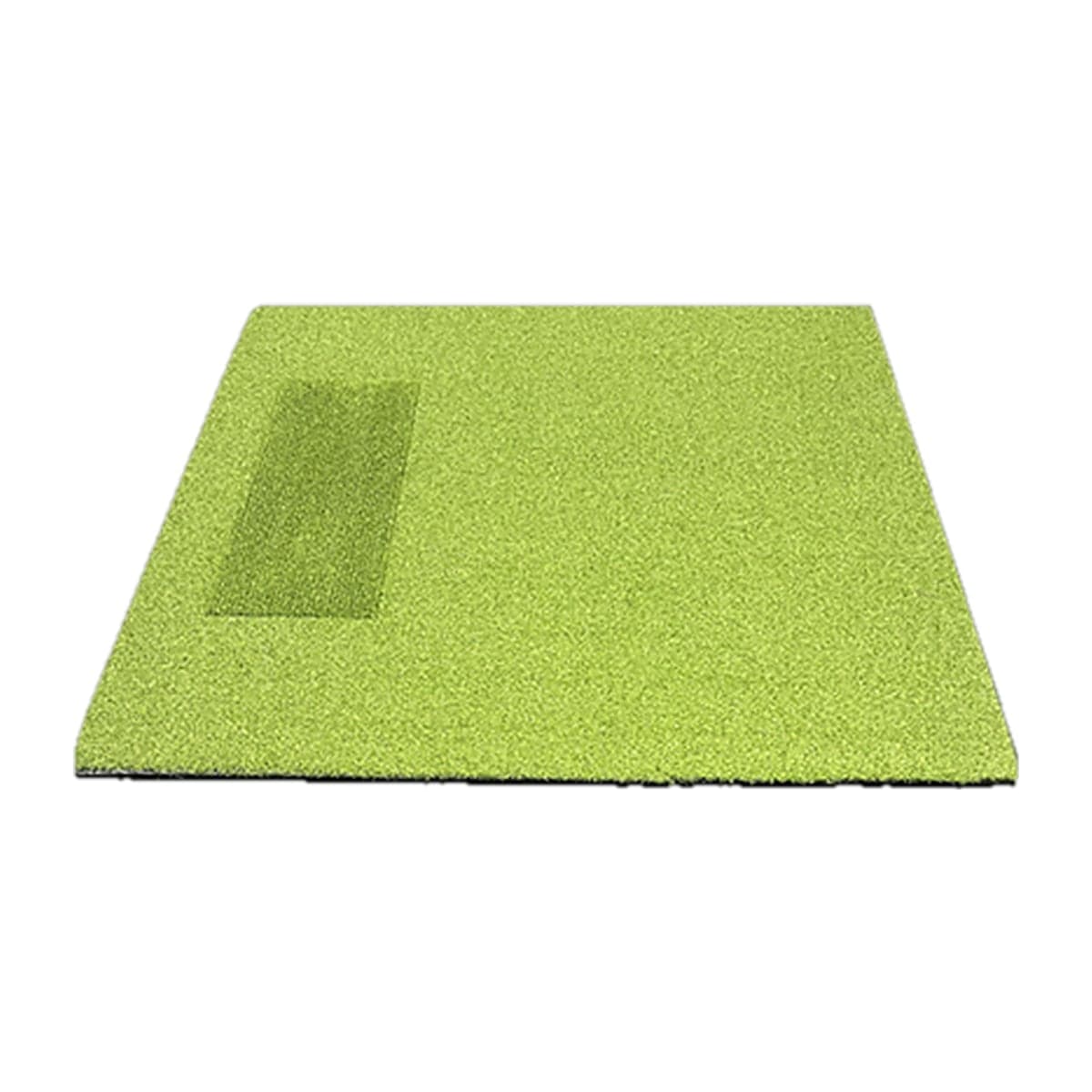 Mid-tierBig MossPure Flight MAX Hitting Mat (5×5)
5×5 stance mat with Big Moss's Pure Flight nylon strip built in. No tee holes.
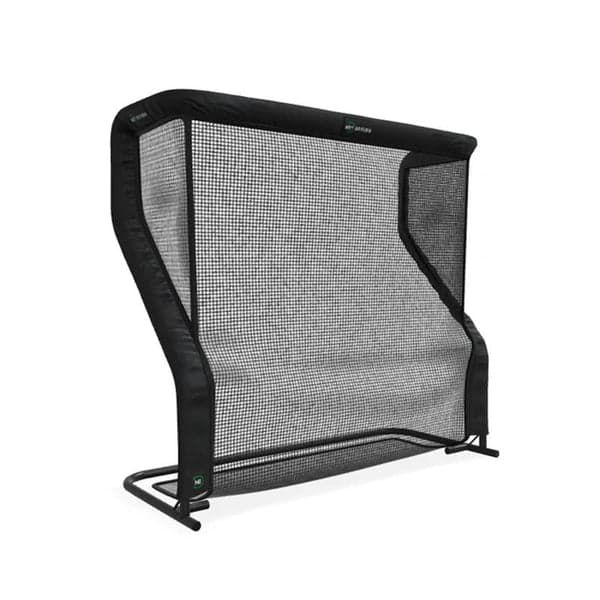
Portable, no-mount, no-tools-required enclosure. Folds away when the garage needs to be a garage. The right pick for renters and tight budgets.
Buy from
- Buy at Amazon $795Free ship, Pro Series V2
- Buy at PlayBetter $795Free ship, Pro Series V2
- Buy at Indoor Golf Outlet $795Free ship, Pro Series V2
- Buy at The Net Return $795Free ship, Pro Series V2
Prices confirmed Nov 12, 2026 · we check every retailer daily
Alternatives we considered
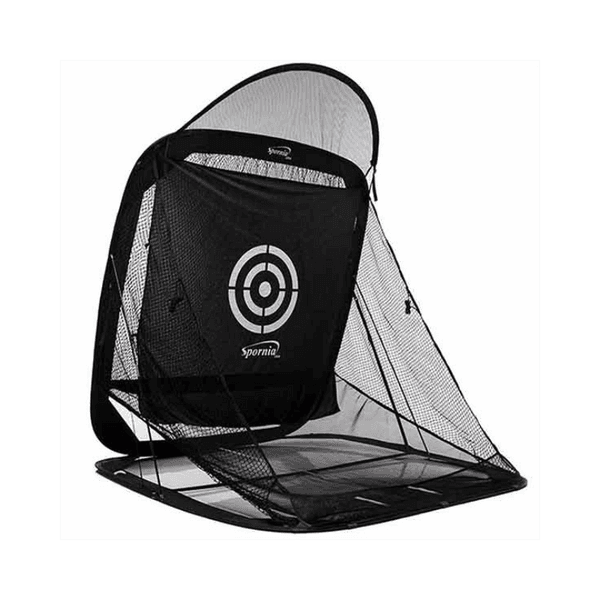 BudgetSporniaSPG-7 Pop-Up Net
Pops up in under two minutes. The cheapest credible portable net for tight spaces.
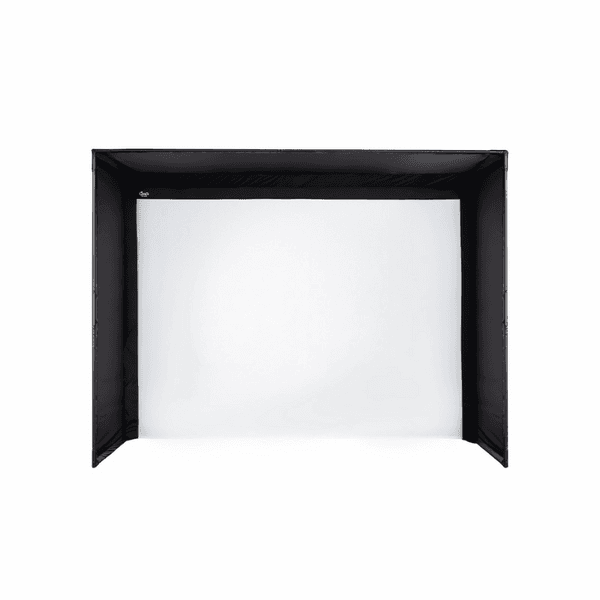 BudgetCarl's PlaceC-Series DIY Enclosure (8x8)
Pro-grade impact screen sized to your room. Delivers the 'real enclosure' look most casual builders want.
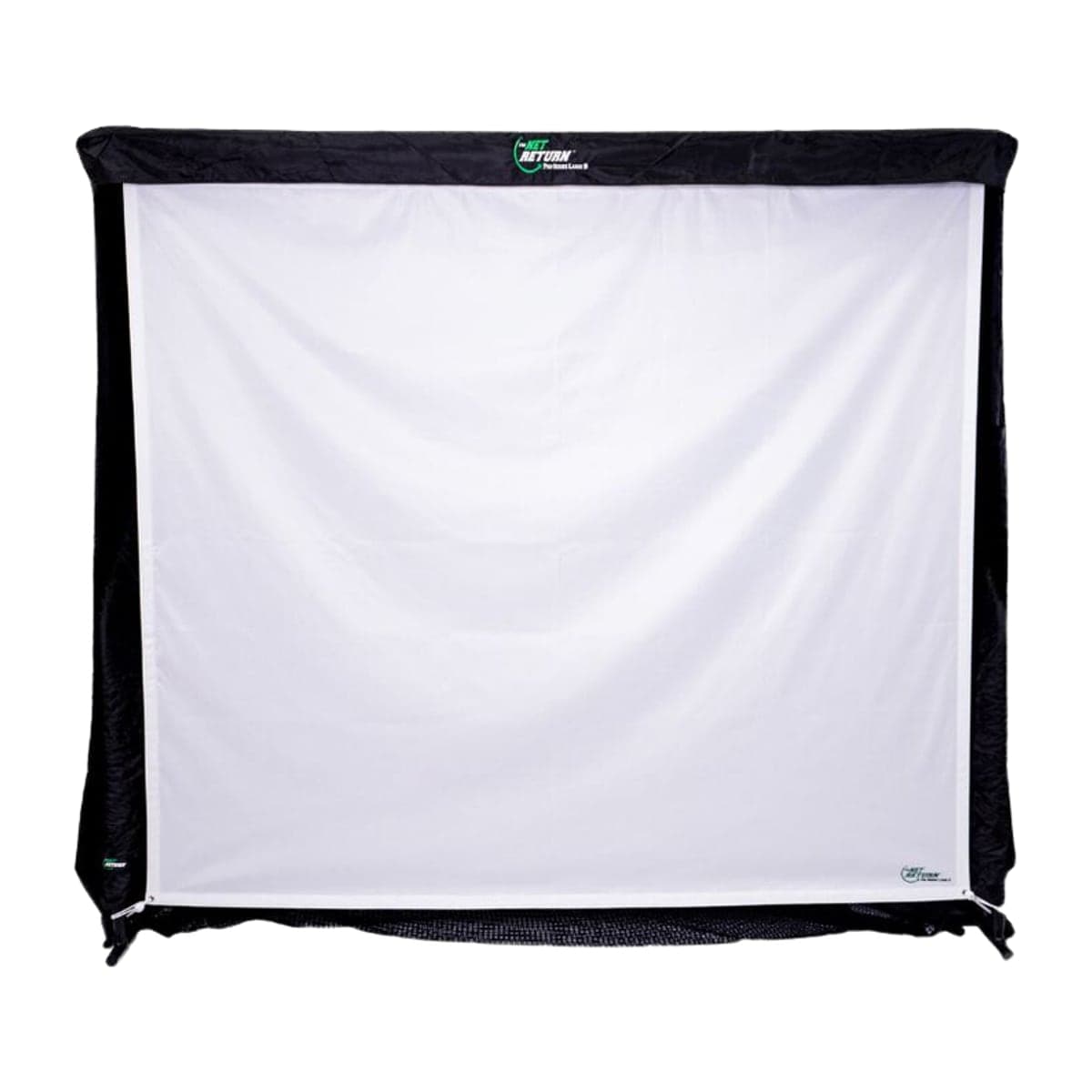
The Net Return is a hitting net, not a screen. This kit adds the impact screen and a darkening valence so the projector has something to project onto.
Buy from
- Buy at Amazon $399Free ship, Net Return Simulator Kit (Screen + Valence)
- Buy at Indoor Golf Outlet $399Free ship, Net Return Simulator Kit (Screen + Valence)
Prices confirmed Nov 12, 2026 · we check every retailer daily
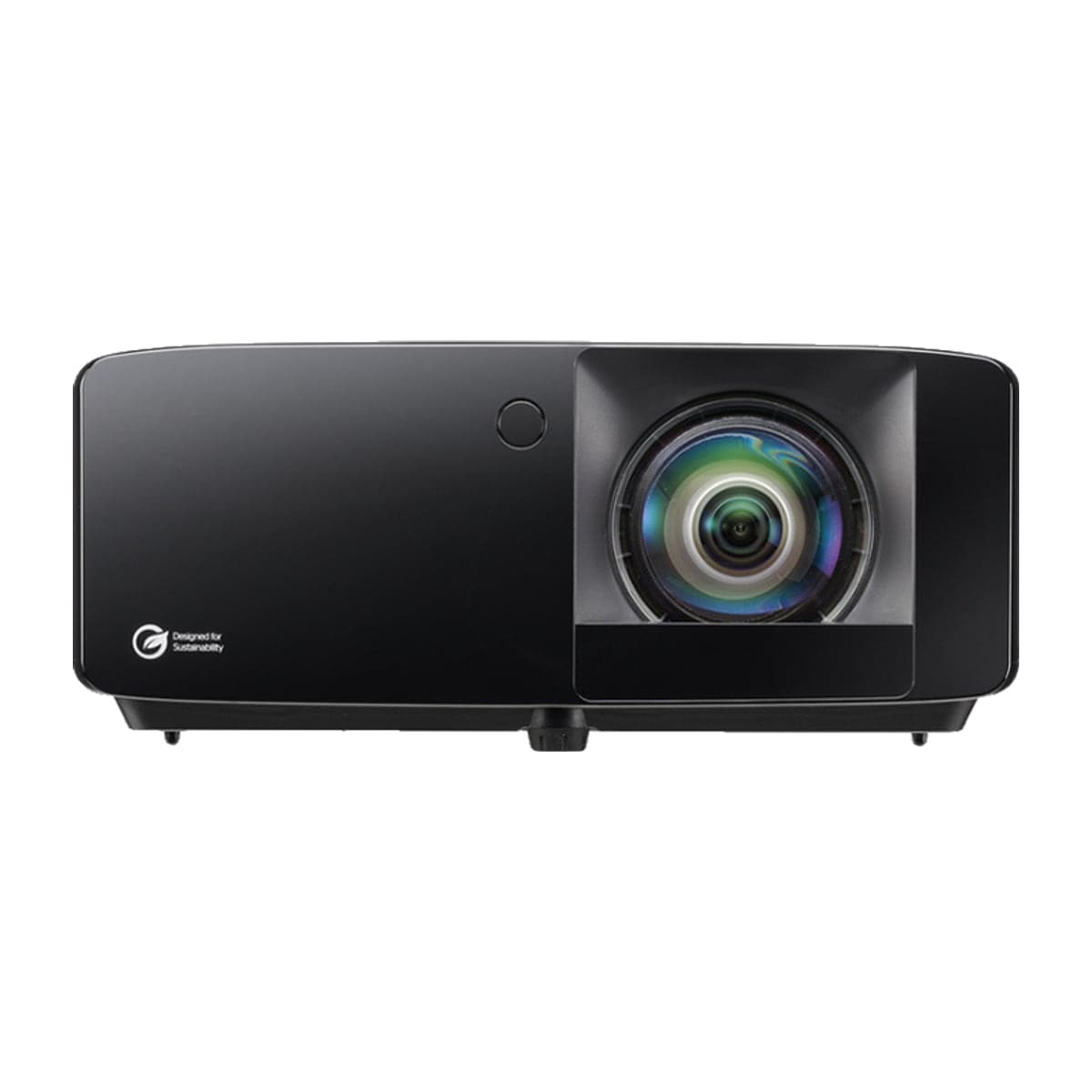
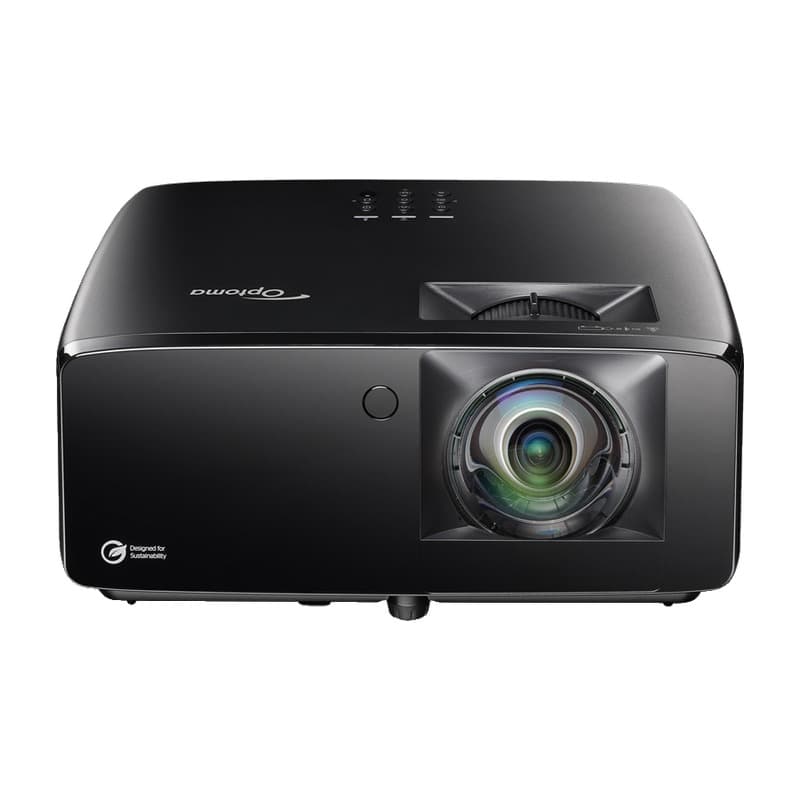
1080p laser short-throw at $1,299 — bright enough for daytime garage use, 30K-hour laser life so you're not buying bulbs ever. On a $4,000 build, Optoma's GT2000HDR saves about $200 for the same throw and laser life, at 3,500 lumens instead of 4,200; a fair trade if you mostly play with the garage door down.
Buy from
- Buy at Amazon $1,299Free ship, GT2400HDR
- Buy at Indoor Golf Outlet $1,299Free ship, GT2400HDR
- Buy at B&H $1,299Free ship, GT2400HDR
Prices confirmed Nov 12, 2026 · we check every retailer daily
Alternatives we considered
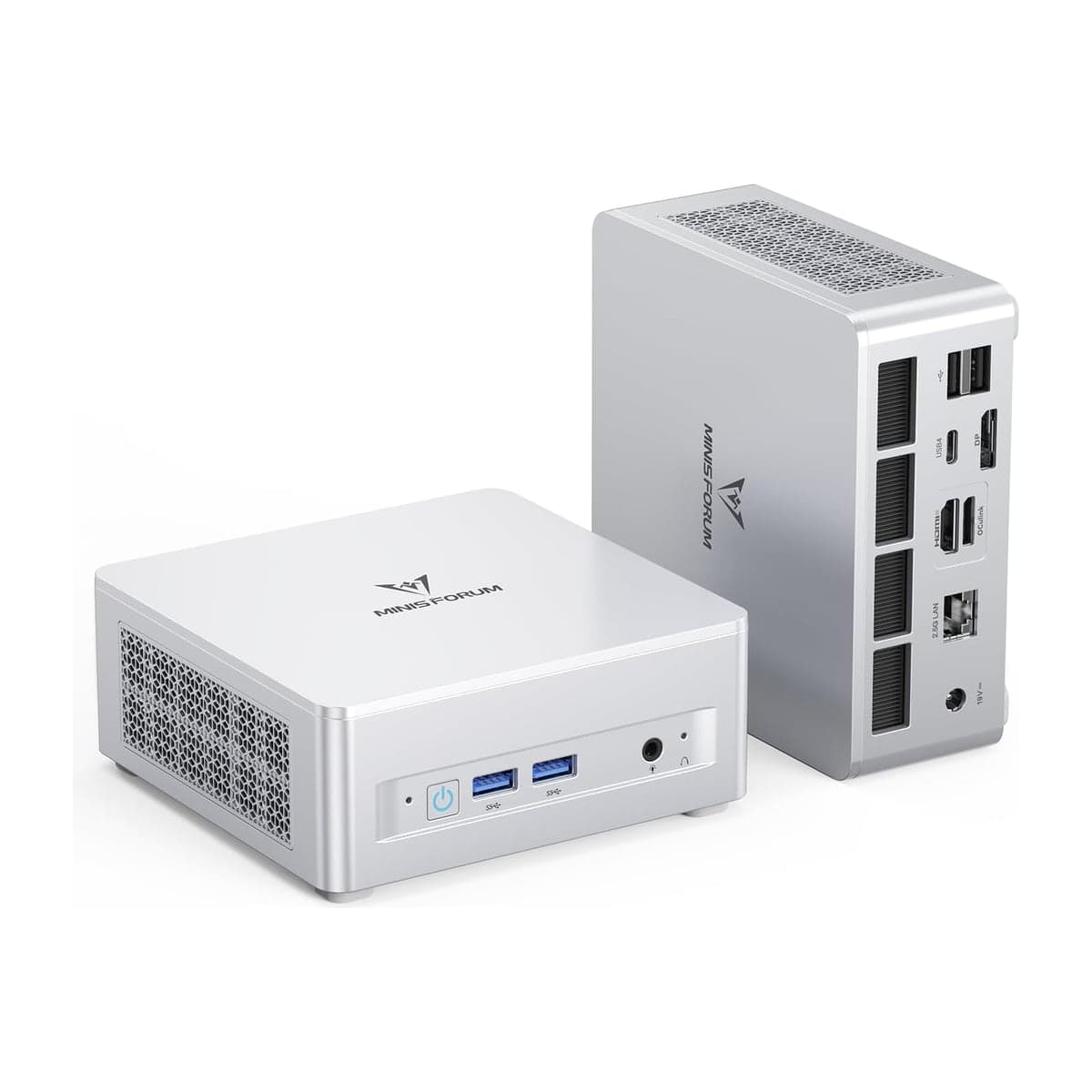
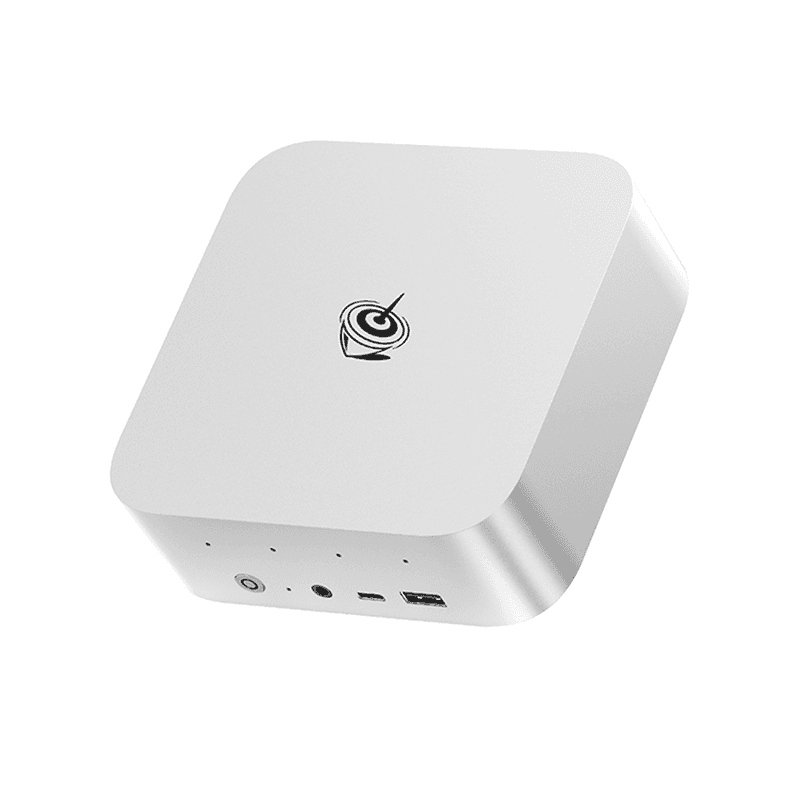
Not needed for this build: Garmin Home Tee Hero runs on a phone or tablet, and the phone drives the projector. Add this $739 mini PC only if you want Awesome Golf on a PC rather than a phone or iPad; it runs on integrated graphics. It is not the computer for E6 Connect, which asks for a dedicated GTX 1070 or better, or GSPro, which asks for an RTX 3060. For either, use the Skytech RTX 5060 tower.
Buy from
Prices confirmed Nov 12, 2026 · we check every retailer daily
Alternatives we considered
 Mid-tierBeelinkBeelink SER9 Pro (Mini PC)
A mini with the Radeon 780M iGPU. The value mini-PC pick; the UM890 Pro adds a faster CPU and 32GB/1TB for more money.
 Mid-tierSkytechGaming PC (Ryzen 7 5700, RTX 5060)
Ryzen 7 5700 + RTX 5060 + 32GB, sold by Amazon.com. Our standard sim PC: comfortably above SkyTrak, E6 Connect and GSPro minimums at 1080p–1440p.
$99.99/year (a Garmin Golf membership) unlocks 43,000+ courses with the R10 — the value-leading subscription in the niche. Skipping it leaves the R10 mostly a range-mode device.
Alternatives we considered
 Mid-tierAwesome GolfAwesome Golf
Best family-and-non-golfer software. Buy-once lifetime license, runs on Windows, Mac, iPad, iPhone, Android and Chromebook.
HDMI cable, basic surge protector, simple cable management.
If you're cross-shopping
Side-by-side comparisons for the The Garage Build — $4,000 Cost-Effective components.
Stay in the loop
Keep an eye on this build.
We email when meaningful pricing changes hit any component in this build, or when a stronger alternative shows up. One short message, maybe twice a month.
Want this build tailored?
Adjust for your room and your budget.
The configurator takes the same logic that produced this build and applies it to your specific dimensions and persona. If your room is tight, expect different picks.