Comparison
Approach R10 vs LM1
Short answer
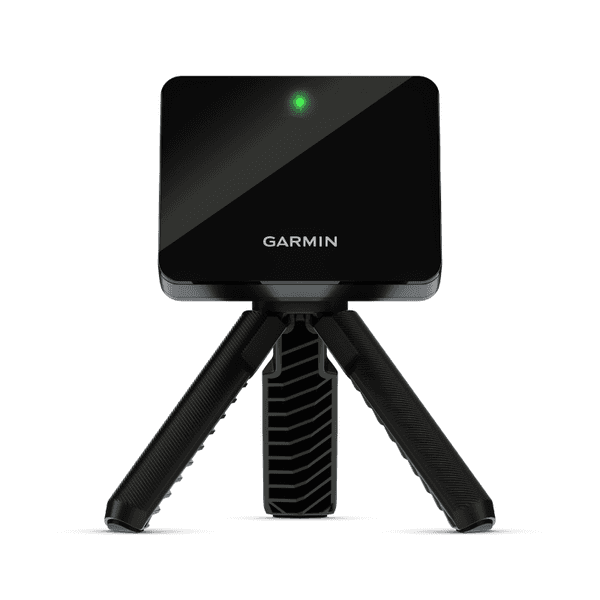
Different products despite the same price bracket. R10 is a sim entry point; LM1 is a range tool. The decision is your use case, not the spec sheet.
When you buy through links on Northcourse, we may earn a commission at no additional cost to you. Read the full affiliate disclosure
By buyer
Which one for you
- Want a budget home golf simulator
- Garmin R10. The LM1 doesn't do sim play at any tier. Pair the R10 with Home Tee Hero ($99.99/yr) and you're at about $600 first-year total — still the cheapest sim entry in the market.
- Want range / net feedback only, no sim
- Shot Scope LM1. $200 once, on-unit display, zero subscriptions. The R10 is more capable but you'd be paying $300 extra for sim features you won't use.
- Plan to take it outside often
- Either works — both have indoor and outdoor modes. R10 wins if you want shot-replay on your phone after a session; LM1 wins if you want to glance at your numbers between hits without picking up a device.
- Long-term path to a serious sim setup
- R10 as the starter. The Home Tee Hero ecosystem migrates straight to the R50 if you upgrade. LM1 has no upgrade path — you'd replace it entirely.
Also worth a look
More comparisons with the Approach R10 and LM1

Bottom line
The longer answer
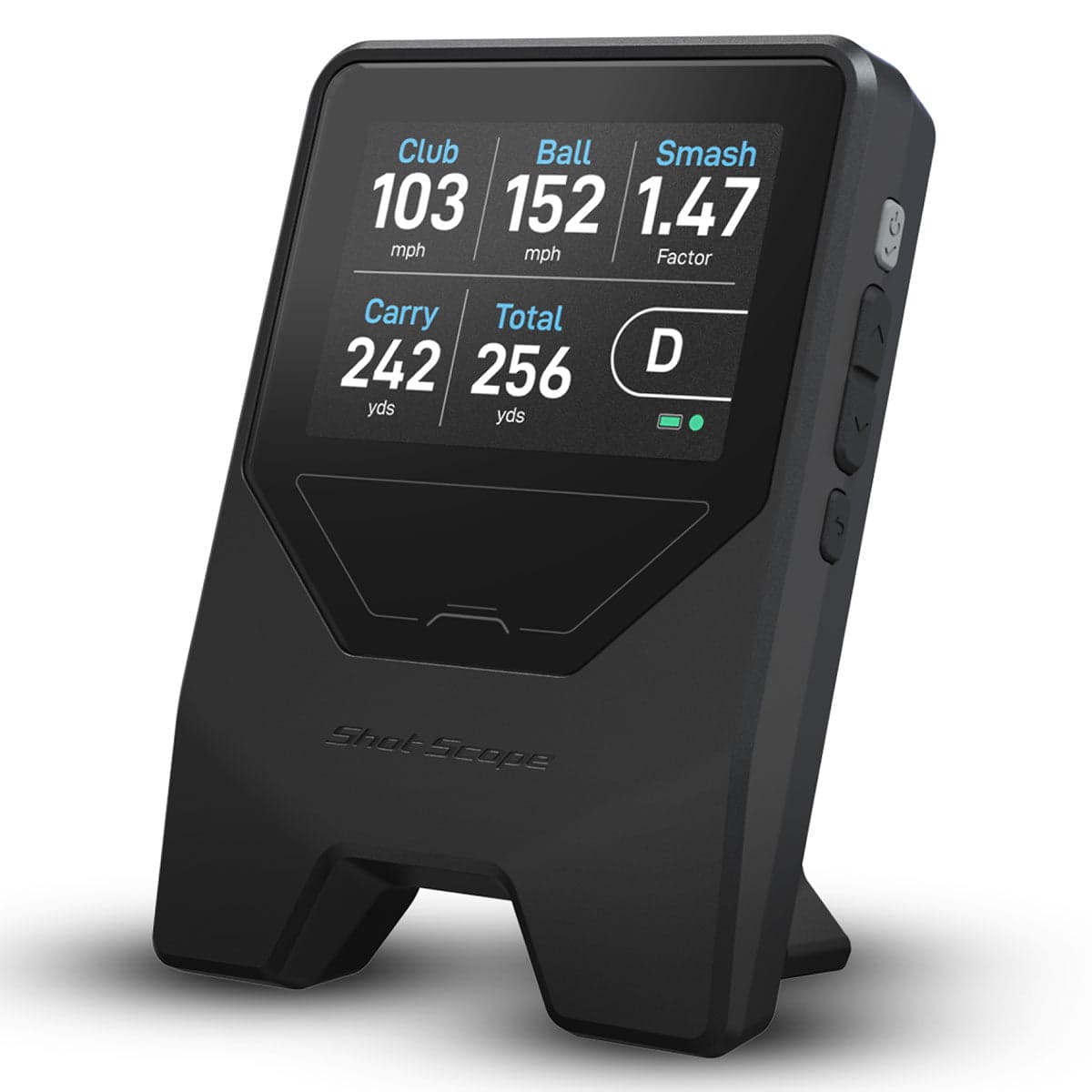
These two get cross-shopped because they're the cheapest credible launch monitors in the US market — but they answer different questions. The Garmin R10 ($499.99) is a Doppler radar that connects to Home Tee Hero and gives you 43,000+-course virtual play for $99.99/yr extra. The Shot Scope LM1 ($200) is a Doppler radar with a built-in 3.5-inch screen and zero ongoing cost — it tells you carry, total, ball speed, club speed, and smash factor. That's it. No sim, no app, no subscription.
If you want a home simulator, the R10 is the only one of these two that gets you there. Pair it with Home Tee Hero, run it on an iPad or a phone, and you have full course play. The LM1 cannot do that — it has no sim integration with any platform. People who buy the LM1 use it at the range or into a backyard net, look at the on-unit display between shots, and call it a day.
If you want feedback at the range or into a net without messing with apps, the LM1 is the cheaper, simpler, and arguably more reliable choice. Independent reviews report its carry distance is within ~1 yard of premium units on full iron shots. You'll never pay another dollar after the purchase. The R10's app-dependent UX is more friction for a range-only use case than the LM1's screen-on-the-box approach.
Buy Approach R10
- Buy at Amazon $500Free ship, Approach R10
- Buy at PlayBetter $500Free ship, Approach R10
- Buy at Indoor Golf Outlet $500Free ship, Approach R10
Show all 5 retailersShow fewer retailers
Prices confirmed Nov 10, 2026 · we check every retailer daily
Buy LM1
- Buy at Amazon $200Free ship, LM1
- Buy at PlayBetter $200Free ship, LM1
- Buy at Indoor Golf Outlet $200Free ship, LM1
Prices confirmed Nov 10, 2026 · we check every retailer daily
When you buy through links on Northcourse, we may earn a commission at no additional cost to you. Read the full affiliate disclosure
Full specificationsEvery spec for both, line by line
Specifications
The numbers, lined up.
Hardware
| Spec | Approach R10 | LM1 |
|---|---|---|
| Tracking Method | Doppler Radar | Single Doppler radar |
| Indoor/Outdoor | Both | Both (most useful at range / hitting net) |
| Battery Life | Up to 10 hours | About 5 hours (USB-C charging) |
| Built-in Display | — | 3.5" screen, history of up to 1,920 shots |
| Placement | — | 5 ft behind the ball (Shot Scope also gives 4–5 ft and 1.4–1.5 m; plan on the 5 ft) |
| Warranty | — | 2 years |
- Tracking MethodApproach R10Doppler RadarLM1Single Doppler radar
- Indoor/OutdoorApproach R10BothLM1Both (most useful at range / hitting net)
- Battery LifeApproach R10Up to 10 hoursLM1About 5 hours (USB-C charging)
- Built-in DisplayApproach R10—LM13.5" screen, history of up to 1,920 shots
- PlacementApproach R10—LM15 ft behind the ball (Shot Scope also gives 4–5 ft and 1.4–1.5 m; plan on the 5 ft)
- WarrantyApproach R10—LM12 years
Data
| Spec | Approach R10 | LM1 |
|---|---|---|
| Ball Data | Speed, launch angle, spin (estimated) | Speed, carry, total distance |
| Club Data | Speed, smash factor; face angle, club path and angle of attack (derived from radar) | Clubhead speed, smash factor only |
- Ball DataApproach R10Speed, launch angle, spin (estimated)LM1Speed, carry, total distance
- Club DataApproach R10Speed, smash factor; face angle, club path and angle of attack (derived from radar)LM1Clubhead speed, smash factor only
Software
| Spec | Approach R10 | LM1 |
|---|---|---|
| App Required | Garmin Golf app or Home Tee Hero | — |
| 2026 Update | Premium graphics from R50 brought down to R10 (Jan 2026) | — |
| Subscription | — | None |
| Sim Compatibility | — | None — standalone unit |
- App RequiredApproach R10Garmin Golf app or Home Tee HeroLM1—
- 2026 UpdateApproach R10Premium graphics from R50 brought down to R10 (Jan 2026)LM1—
- SubscriptionApproach R10—LM1None
- Sim CompatibilityApproach R10—LM1None — standalone unit
Room planner
See each one in your sim room.
The planner draws each unit to scale with your room and your swing: where it sits, and whether your swing clears the ceiling, walls and screen. Put in your room once, then switch units in the planner to compare.
Persona fitWho each one is better for
Who each one is better for
Both fit the same buyers.
Neither one wins a persona the other doesn’t. The choice comes down to specs, price, and room fit rather than buyer profile.
Both fit
- Cost-Effective Buyer
- Recreational Player
Build your simulator in two minutes
Five questions. One tailored build with retailer links.
We ask about your budget, your room, and how you’ll use it. We return a complete build — launch monitor, mat, enclosure, projector, software, PC — with the reasoning behind every pick and the alternatives we considered.